
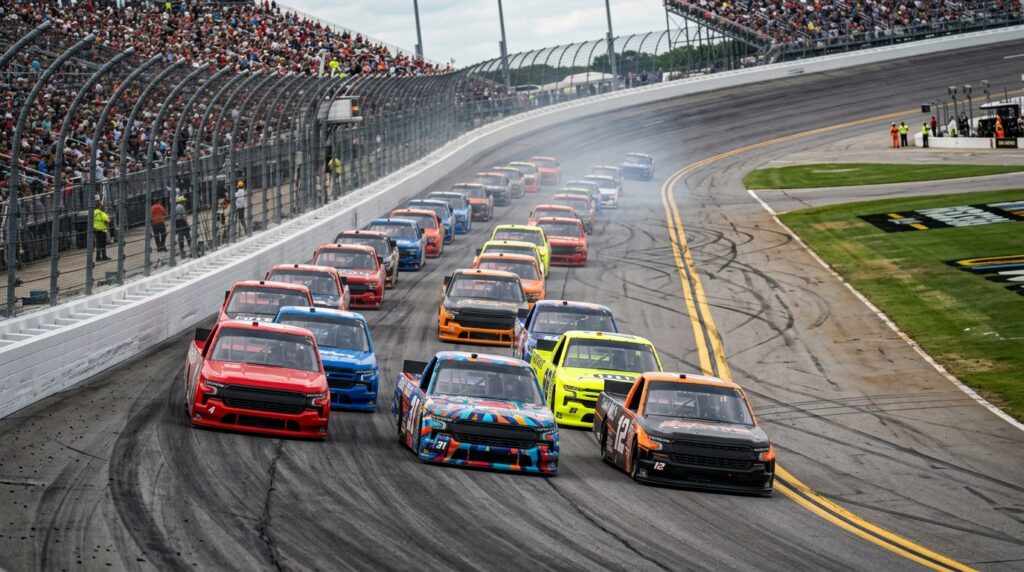
The NASCAR Truck Series Talladega 2026 race is shaping up to be one of the most intriguing events remaining on the championship calendar. The NASCAR Craftsman Truck Series is scheduled to visit Talladega Superspeedway on Friday, October 23, for the Love’s RV Stop 225. With the 2026 Chase approaching its conclusion, the event creates an important test of drafting strategy, race management, and championship discipline.
Talladega is known for close racing, large groups of vehicles, and the ability of competitors to gain or lose numerous positions within a short distance. Unlike smaller ovals where mechanical grip and corner rotation dominate discussions, superspeedway competition places enormous emphasis on aerodynamic relationships and cooperation between drivers.
For New England truck racing supporters, Talladega provides a fascinating contrast with regional competition at Waterford Speedbowl. Although the tracks are dramatically different in size, both environments reward patience, awareness, and the ability to make smart decisions under pressure.
The Talladega event is also significant because the championship schedule is moving toward its final races at Martinsville and Homestead-Miami. A strong performance can help a contender maintain momentum, while an accident or mechanical failure can complicate the remaining title battle.
This preview explores what makes Talladega unique, why drafting is essential, how drivers manage risk, and what grassroots racing teams can learn from superspeedway competition.
Why Talladega Is One of the Biggest Challenges in the 2026 Truck Series Chase
Talladega Superspeedway is a 2.66-mile oval in Alabama. Its long straightaways and steeply banked turns create conditions that differ substantially from intermediate tracks and short ovals.
The Love’s RV Stop 225 is scheduled for 85 laps, covering approximately 226.1 miles. The distance may appear relatively short compared with some other NASCAR events, but Talladega’s racing style means that drivers must remain attentive to surrounding traffic for nearly the entire competition.
Large packs can form because trucks traveling close together influence each other’s aerodynamic performance. A driver running alone may struggle to maintain the same speed as a well-organized group, making track position and drafting partnerships especially important.
However, the same close proximity that produces exciting racing can also increase the consequences of small mistakes. A sudden lane movement, misjudged bump, or mechanical problem may affect several nearby competitors.
How drafting works in NASCAR truck racing
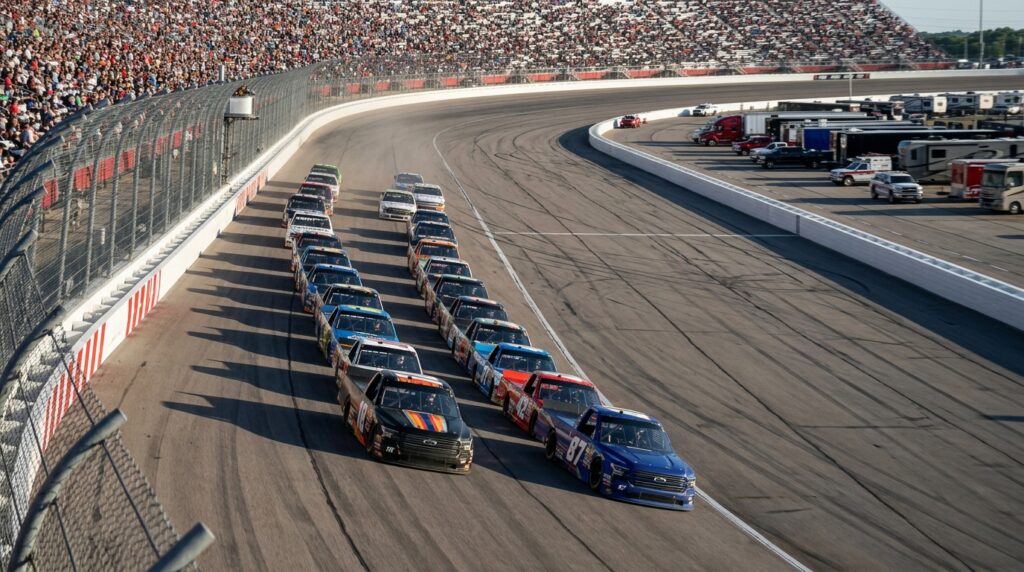
Drafting occurs when vehicles travel close enough to influence airflow around one another. The lead truck creates a wake, and vehicles following behind can experience reduced aerodynamic resistance under suitable conditions.
This relationship can help groups of trucks maintain competitive speeds. Drivers must understand when to remain in line, when to attempt a pass, and how their movements affect surrounding vehicles.
A drafting line can gain momentum when drivers cooperate effectively. However, a poorly timed move may cause a driver to lose support from the trucks behind and fall backward through the field.
Superspeedway racing therefore combines individual competition with temporary cooperation. Drivers want to finish ahead of their rivals, but they often need help from those same rivals to advance through traffic.
Why trucks often race in tightly packed groups
The aerodynamic advantages of running near other vehicles can encourage competitors to remain together. Multiple trucks may form lines that travel at similar speeds while trying to build momentum.
Drivers watch the movement of other lanes and decide whether to defend their position or follow a faster group. Those decisions become especially difficult when competitors are running side by side.
Spotters play an essential role in communication. They help drivers understand when another truck approaches, whether a lane is occupied, and how traffic is developing.
Clear communication does not eliminate risk, but it helps drivers make more informed decisions when visibility is limited by surrounding vehicles.
What makes passing at Talladega different
Passing at Talladega is not always a simple matter of having the fastest individual truck. A competitor may need several vehicles working together to create enough momentum to move forward.
Drivers must decide when to leave an established drafting line. A successful move can produce a major position gain, but leaving too early may result in losing aerodynamic support.
Lane choice becomes especially important during restarts. Drivers positioned near the front can influence which line develops momentum, while those farther back must anticipate how the pack will respond.
This makes Talladega an appealing event for fans because the running order can change rapidly without requiring every pass to begin with a traditional side-by-side corner entry.
Managing risk during superspeedway competition
Risk management is central to superspeedway racing. When trucks run closely together, the available time to react to sudden changes can become limited.
Competitors must maintain awareness of the vehicles ahead, behind, and alongside them. Aggressive movements may create opportunities, but drivers also need to consider how those movements affect the larger pack.
A championship contender faces particularly difficult decisions. Running near the front may provide an opportunity to score a strong result, yet aggressive racing can increase exposure to incidents.
Some drivers prefer to remain near the front to avoid problems deeper in the field. Others may adopt a more conservative approach during certain stages. Neither strategy guarantees protection because accidents can happen anywhere.
The most effective decisions depend on the circumstances, race stage, championship objectives, and behavior of surrounding competitors.
Why late-race restarts can reshape the championship
A late caution compresses the field and creates another opportunity for drafting lines to form. Drivers who were previously separated may suddenly be racing alongside one another again.
As the finish approaches, competitors often become more willing to attempt moves that carry additional risk. Several trucks may fight for the same lane or attempt to advance before an opportunity disappears.
For championship contenders, a single mistake can have consequences extending beyond the race itself. That reality creates a difficult balance between collecting valuable positions and protecting the opportunity to compete in the remaining events.
The importance of late restarts is familiar to New England fans. Earlier in the season, Layne Riggs won at New Hampshire after two overtime restarts, demonstrating how rapidly a race can change near its conclusion.
What Talladega Means for New England Fans and Grassroots Racing
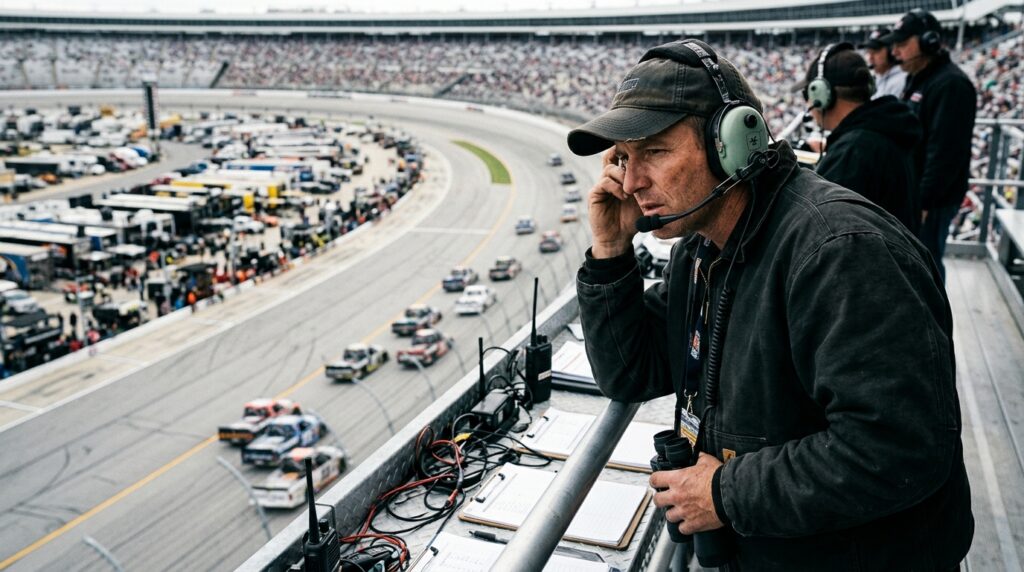
Talladega is a national superspeedway event, but the strategic lessons extend beyond NASCAR’s highest-profile truck competitions. Regional drivers also depend on awareness, communication, patience, and preparation.
At Waterford Speedbowl, racing lines are influenced by corner geometry, mechanical grip, and traffic. At Talladega, aerodynamic relationships have a larger influence on passing and pack behavior.
Despite those differences, drivers at both tracks must understand where surrounding competitors are positioned. A poorly judged move can damage equipment or eliminate a strong finish.
New England fans can use Talladega as an opportunity to study how national competitors handle traffic and pressure. Watching the race with attention to drafting lines, spotter communication, and late-race decisions reveals more than simply tracking the leader.
Three racing lessons that apply beyond superspeedways
The first lesson is situational awareness. Successful competitors continually evaluate what is happening around them instead of concentrating only on the truck immediately ahead.
At a local short track, that awareness includes understanding where another driver may attempt a pass and recognizing when a corner entry is becoming crowded.
The second lesson is communication. Crews and spotters provide information that drivers may not be able to observe directly. Clear, concise messages can reduce confusion during restarts and traffic-heavy situations.
The third lesson is patience. Drivers sometimes improve their final result by waiting for a better passing opportunity rather than forcing a maneuver that is unlikely to succeed.
These fundamentals are especially relevant for newcomers. Our guide for new truck racing drivers in New England explains why learning race craft and building consistent skills should come before chasing maximum speed.
Regional races also demonstrate how positions can change through disciplined execution. Ryan Lineham’s September victory at Waterford Speedbowl came after starting sixth. His result illustrates the value of combining competitive equipment with the ability to move forward during a feature.
Read our Waterford truck racing analysis for more information about that event and the regional racing environment.
Fans who are new to truck racing should also explore the Waterford Speedbowl fan guide. Understanding the differences between national competition and local racing can make both experiences more rewarding.
For official event details, television information, and updated results, consult the NASCAR Craftsman Truck Series 2026 schedule. As with any motorsport event, the published schedule can be affected by operational or weather-related changes.
Looking beyond Talladega, the remaining championship calendar includes Martinsville Speedway on October 30 and Homestead-Miami Speedway on November 6. These events present contrasting challenges, making adaptability essential for drivers pursuing the title.
Martinsville emphasizes close short-track competition, braking control, and track position. Homestead-Miami requires drivers and teams to manage the characteristics of an intermediate oval, including tire behavior and racing-line choices.
A championship-winning team must perform across those different environments. Success cannot depend entirely on one racing style or a single strong event.
This is an important reminder for regional competitors. Learning how to adapt to changing tracks, weather conditions, and traffic can strengthen a driver’s development over time.
For the New England Truck Series audience, Talladega also offers an opportunity to introduce newcomers to the broader truck racing community. Spectacular drafting battles may attract attention, while local events give fans the chance to connect directly with drivers and teams.
Both forms of competition contribute to the popularity of the sport. National races create major storylines, while regional tracks preserve the grassroots racing culture that supports future drivers and crew members.
The NASCAR Truck Series Talladega 2026 event promises a demanding test of drafting, teamwork, and decision-making. With championship pressure rising and the season finale approaching, fans should watch how drivers manage risk, build momentum, and respond to changing race conditions.
Whether the decisive moment comes from a strategic lane change, a late restart, or a disciplined finish, Talladega offers another opportunity to appreciate the complexity of truck racing. For New England supporters, the event reinforces the connection between national motorsports and the regional racing community.