
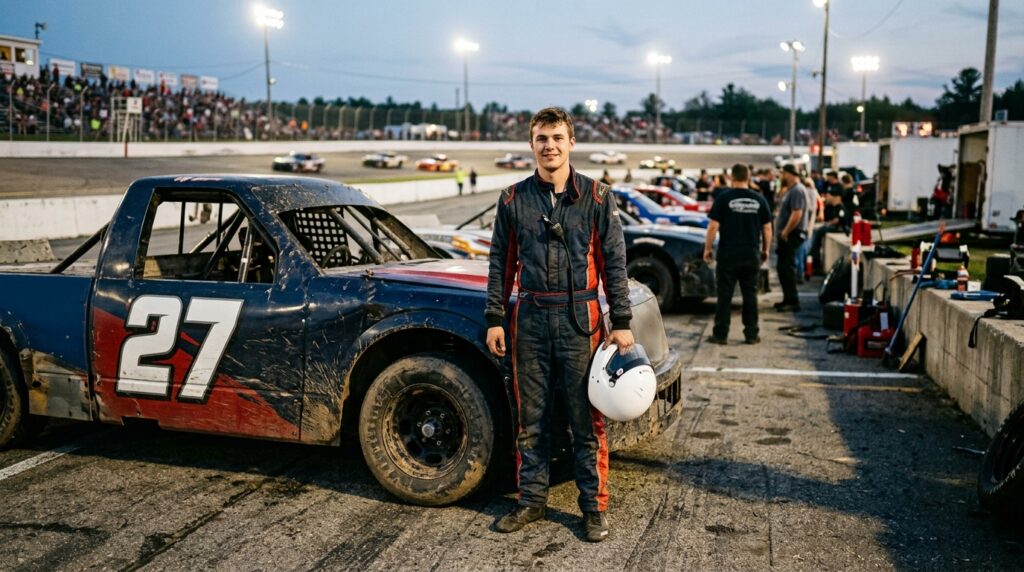
Starting truck racing in New England can feel intimidating from the outside. You see the trucks, the speed, the crews, the trailers, the safety gear, and the pressure of race night. It can look like everyone already knows where to go, what to buy, who to talk to, and how to get on track. The truth is simpler: every driver starts somewhere.
If you want to get involved in truck racing, the smartest move is not to rush into buying the first truck you find. The better path is to learn the local racing scene, understand the rules, meet people at the track, build seat time, and prepare yourself properly before your first real race. New England has a strong short-track culture, and truck racing gives new competitors a chance to join a community that values preparation, discipline, and respect.
The New England Truck Series is a natural place to start learning because it connects local truck racing fans, aspiring drivers, and experienced competitors. Whether your goal is to race, crew for a team, sponsor a driver, or simply understand the sport better, the first step is getting close to the action and learning how race weekends really work.
Step One: Learn the Local Truck Racing Scene
Before spending money, spend time at the track. Watch races in person. Walk the pit area when allowed. Pay attention to the trucks, drivers, crews, and race procedures. A few nights at the track can teach you more than hours of guessing online. You will see how teams prepare, what problems they face, how much work happens before the green flag, and what separates organized teams from unprepared ones.
New drivers should also read as much as possible. Start with the Beginner’s Guide to the New England Truck Series to understand the basic structure of the series. Then browse the New England Truck Series blog for race updates, driver tips, and truck racing insights.
Understand the Difference Between Watching and Competing
Watching racing and competing in racing are completely different experiences. From the grandstands, a pass may look simple. From the driver’s seat, it depends on braking points, corner entry, throttle control, tire grip, spotter communication, and the behavior of the truck in traffic. That is why new drivers should be humble about the learning curve.
Truck racing rewards patience. A beginner who wants to win immediately will usually make expensive mistakes. A beginner who focuses on clean laps, smooth inputs, and learning from experienced drivers will improve faster. The goal of your first season should not be to prove you are fearless. The goal should be to prove you are coachable, safe, consistent, and serious.
Talk to Teams Before Buying a Truck
One of the biggest beginner mistakes is buying equipment too early. A truck that looks good in photos may not fit the class rules, safety requirements, budget, or maintenance level you need. Before buying anything, talk to local teams, series officials, and experienced crew members. Ask what type of truck makes sense for a new driver. Ask what parts are expensive. Ask what breaks often. Ask what they wish they knew before starting.
This advice can save you real money. Racing is already expensive enough without starting with the wrong equipment. A used truck can be a smart option, but only if it is legal, safe, inspectable, and realistic for your skill level. Do not buy based only on appearance. Buy based on rules, condition, support, and long-term costs.
Study the Rules Like a Competitor
Every racing division has rules. New drivers need to treat those rules seriously. Rules control safety equipment, truck specifications, tires, engines, weight, suspension, body requirements, race format, conduct, inspections, and penalties. If you ignore the rulebook, you can waste money, fail inspection, or create safety problems.
Do not rely only on secondhand advice. Get the current rules from the series or track. Then read them carefully and ask questions before making changes to a truck. Rules can update from season to season, so never assume last year’s setup is automatically legal. Serious drivers respect the rulebook because it protects the competition and keeps the field fair.
Build Skills Before You Chase Speed
New drivers often think racing is mostly about being fast. Speed matters, but control matters more. A driver who can run consistent laps, hold a line, communicate clearly, and avoid unnecessary contact will earn more respect than a driver who is fast for three laps and reckless for the next ten.
Start by building fundamentals. Learn smooth steering. Learn how the truck reacts under braking. Learn how to roll through the center of the corner. Learn when to be patient and when to commit to a move. Learn how to restart without panic. These skills matter at every level of racing.
If you are completely new to motorsports, consider getting experience in lower-cost racing environments before jumping straight into a truck. Karting, simulator work, track schools, and crew experience can all help. They are not perfect replacements for truck racing, but they can teach awareness, racing lines, timing, and discipline.
Safety Gear Is Not the Place to Cut Corners
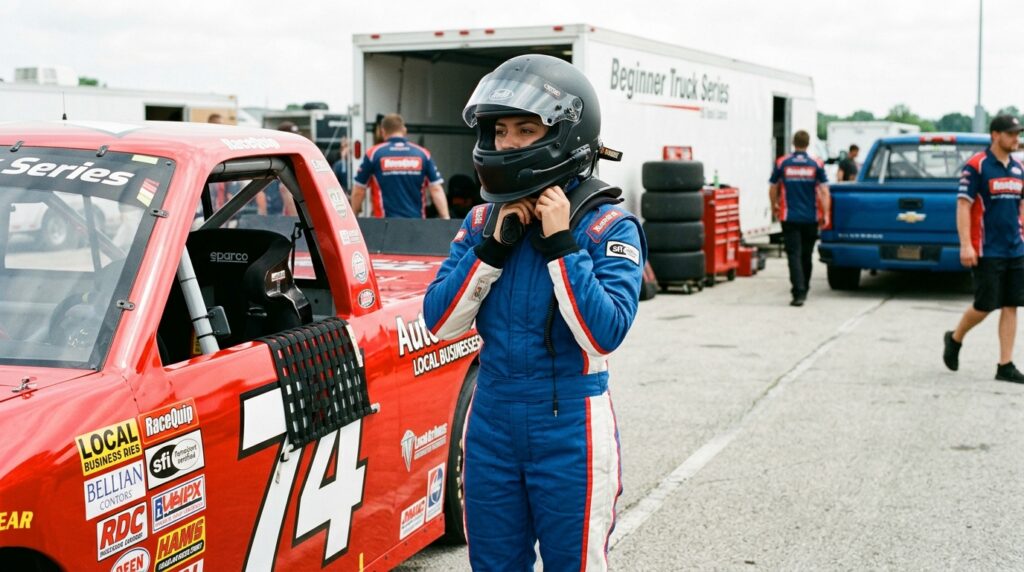
Racing safety gear exists for a reason. A proper helmet, fire suit, gloves, shoes, and head-and-neck restraint are not accessories. They are part of the cost of entering the sport responsibly. Always confirm the required specifications with the series or track before buying gear.
For helmet information, the Snell Foundation standards page is a useful outside reference because it lists helmet standards for competitive automotive sports. Still, your final checklist should come from the specific series, track, or sanctioning body you plan to race with. Local rules are the rules that matter on inspection day.
Step Two: Join the Racing Community the Right Way
Truck racing is not a solo hobby. Even if you are the driver, you will need help. You need people who understand setup, maintenance, tires, safety, transportation, spotting, and race-day decision-making. The sooner you build relationships, the easier your path becomes.
A good way to start is by helping an existing team. Offer to assist in the pits, clean wheels, organize tools, load equipment, or help with simple tasks. Do not act like you know everything. Show up, listen, work hard, and be reliable. Teams remember people who help without drama.
Create a Realistic First-Season Plan
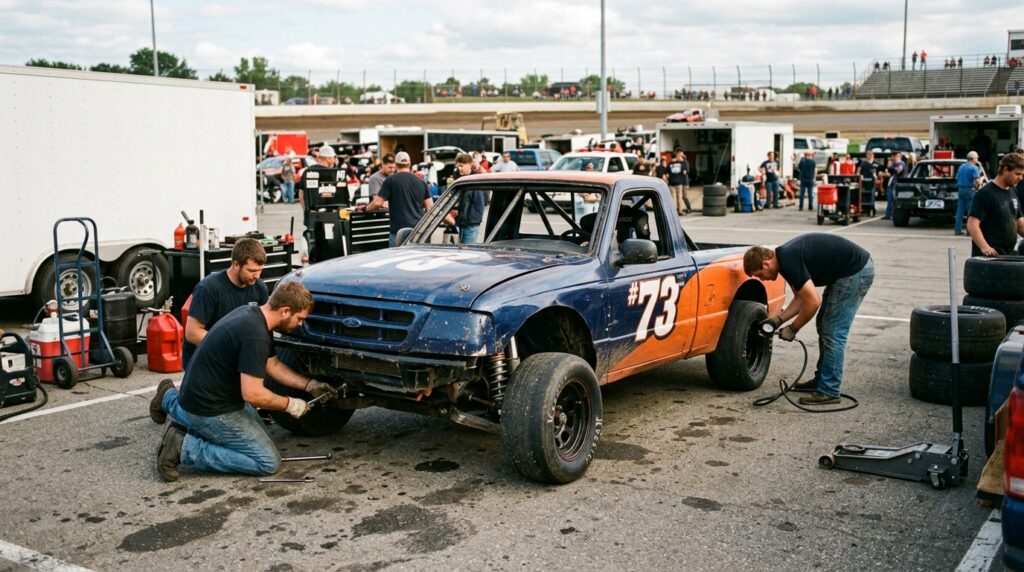
Your first season should be planned around learning, not ego. Set realistic goals. For example, you may aim to pass inspection, complete practice sessions, finish races cleanly, improve lap times, and build relationships with other teams. Those goals may not sound flashy, but they create the foundation for long-term success.
Budget planning is also important. Racing costs include the truck, safety gear, tires, fuel, parts, tools, trailer needs, entry fees, repairs, and travel. You should also expect unexpected expenses because racing is hard on equipment. If your budget is tight, be honest about it. It is better to run fewer races properly than to overextend yourself and show up unprepared.
New drivers should also think about sponsorship early, but not in a lazy way. A sponsor is not just someone who gives money. A sponsor is a partner who expects value. Bring them clear photos, social media exposure, website mentions, local visibility, and professional communication. If you want sponsors to take you seriously, present your team seriously.
Your Reputation Starts Before Your First Green Flag
In local racing, reputation travels fast. How you act in the pits, how you speak to officials, how you respond to mistakes, and how you treat other teams all matter. New drivers should focus on being respectful, prepared, and accountable. If you cause a problem, own it. If someone helps you, thank them. If you do not understand something, ask.
The best beginners are not the loudest. They are the ones who learn quickly, listen carefully, and improve without creating unnecessary problems. Racing is competitive, but it is still a community. The drivers and teams you race against may also be the same people who help you fix a problem one night when you need it most.
To understand what makes a competitive truck strong, read The Best Trucks in the New England Truck Series: Speed, Power, and Performance. It can help you think beyond horsepower and focus on the full package: setup, reliability, balance, and preparation.
Starting truck racing in New England takes patience, money, time, and humility. But for the right person, it is worth it. The sport gives you speed, pressure, teamwork, and a racing family that cannot be copied from the grandstands. Start smart, ask questions, respect safety, learn the rules, and build your way into the seat properly. That is how a beginner becomes a real competitor.