
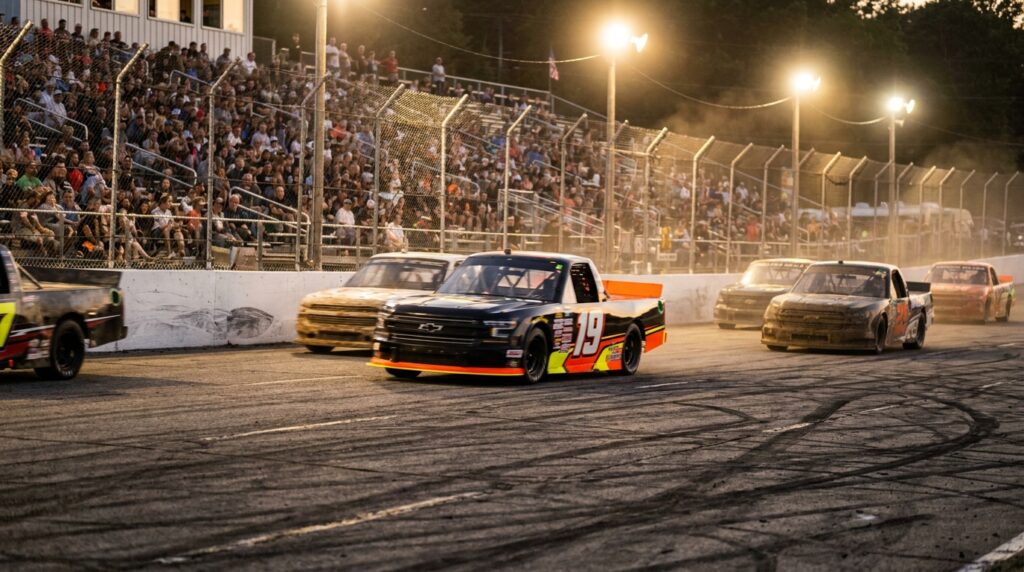
New England truck racing delivered another strong local storyline on September 5, 2026, when Ryan Lineham won the Truck A Feature at New London-Waterford Speedbowl in Waterford, Connecticut. Lineham started sixth in the No. 19 truck and finished ahead of pole-sitter Mason Silva in the No. 31 and Cameron Varricchio in the No. 54. The official Speedbowl results also show an 11-truck feature field, giving local fans another useful snapshot of how competitive the division remains as the 2026 season moves into its late stages.
The result matters for more than one Saturday night. Waterford has long represented the kind of short-track environment where drivers have to combine patience, race craft, setup knowledge, and confidence in traffic. A driver who can move forward from the third row and finish first is doing more than recording a victory; he is showing why regional truck racing remains one of the most entertaining parts of the New England motorsports scene.
For fans following the broader growth of the discipline, the timing is also important. Interest in trucks has been building at both the grassroots and national levels throughout 2026. Our previous coverage of why short-track truck racing is growing again in 2026 looked at the appeal of close racing, accessible local venues, and a stronger connection between fans and competitors. The September 5 Waterford result gives that larger trend a fresh, local example.
What the September 5 Waterford Truck Result Tells Us
The simplest way to read the result is that Lineham won and Silva and Varricchio completed the top three. The more useful way to read it is to look at where those drivers started and what that says about opportunity in a short-track feature. Lineham started sixth, Silva started first, and Varricchio started second. Three very different starting positions produced the top three finishing positions, which is exactly why local truck racing can stay unpredictable even when fans know the regular contenders.
Ryan Lineham Turned a Sixth-Place Start Into the Win
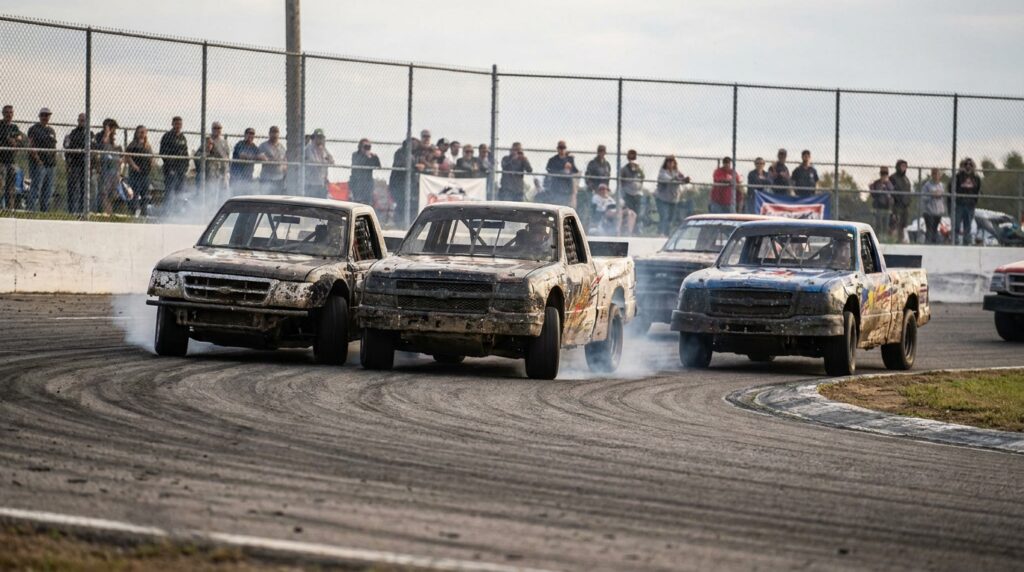
Starting sixth is not the back of the field, but it does place a driver behind enough traffic that the race cannot be controlled from the opening green flag. Lineham had cars between himself and clean air, and he still ended the feature at the top of the official results. That makes the win especially relevant for drivers who understand how quickly a short-track race can change.
At a compact oval, every position matters. Drivers must judge braking, rotation, exit speed, traffic, and when to protect equipment versus attack. That mix of discipline and aggression is one reason Waterford-style racing creates such strong fan interest.
Starting Position Tells Only Part of the Story
Qualifying and heat races matter because track position is valuable, but a feature asks different questions. Can the truck stay balanced over a longer run, manage traffic without losing momentum, and adapt as the track changes? A sixth-place start can become a winning position when the driver and truck remain competitive through the entire event.
That is also a useful lesson for newer racers. Aspiring drivers sometimes focus too heavily on the first lap or the starting grid. In reality, local short-track racing rewards preparation across the whole night. Anyone considering getting involved can read our beginner’s guide to starting truck racing in New England for a broader look at preparation, rules, safety, and learning the local racing environment before spending heavily on equipment.
The Top Three Shows the Depth of the Local Truck Field
Silva started from the pole and finished second, while Varricchio started alongside him and finished third. That means the front row remained highly competitive, but it was not untouchable. Jake Coutu finished fourth after starting fifth, and Chris Palamar completed the top five after starting seventh. The result sheet therefore shows movement throughout the leading group rather than a simple start-to-finish procession.
For fans, that is exactly what keeps a weekly division interesting. Familiar names can be strong without making the outcome automatic. A front-row starter may have the early advantage, while a driver from deeper in the field can still become the winner. The balance between track position and race pace creates the tension that short-track racing needs.
Why Waterford Truck Racing Matters Late in the 2026 Season
By September, teams have months of notes, setup changes, repairs, tire information, and race experience behind them. Late-season races test whether that work has produced real improvement. Small gains in consistency can suddenly become visible in finishing position.
Waterford also gives New England truck racing a recognizable home base. The Speedbowl’s official results page confirms that Trucks were part of the September 5 program alongside SK Modifieds, Late Models, Mini Stocks, and Crown Vics. That multi-division format is a classic part of regional motorsports because it exposes fans to different kinds of race vehicles during one night and helps build crossover interest between divisions.
Grassroots Racing Rewards Consistency More Than Hype
National motorsports often revolves around major announcements, manufacturer news, celebrity drivers, television windows, and playoff drama. Local racing operates differently. The biggest currency is showing up prepared and performing week after week. A driver can build a reputation through clean racing, strong finishes, mechanical reliability, and steady improvement long before a national audience ever knows the name.
That is why results like this deserve coverage. They document the racers who are actually competing in the region and give fans a reason to follow their progress. They also help sponsors understand that grassroots motorsports produces repeated local exposure rather than a single moment. Our article on how the 2026 truck racing boom can grow New England short-track racing explores how national interest, streaming, and sponsor visibility can strengthen this local ecosystem.
What New England Truck Fans and Teams Should Watch Next
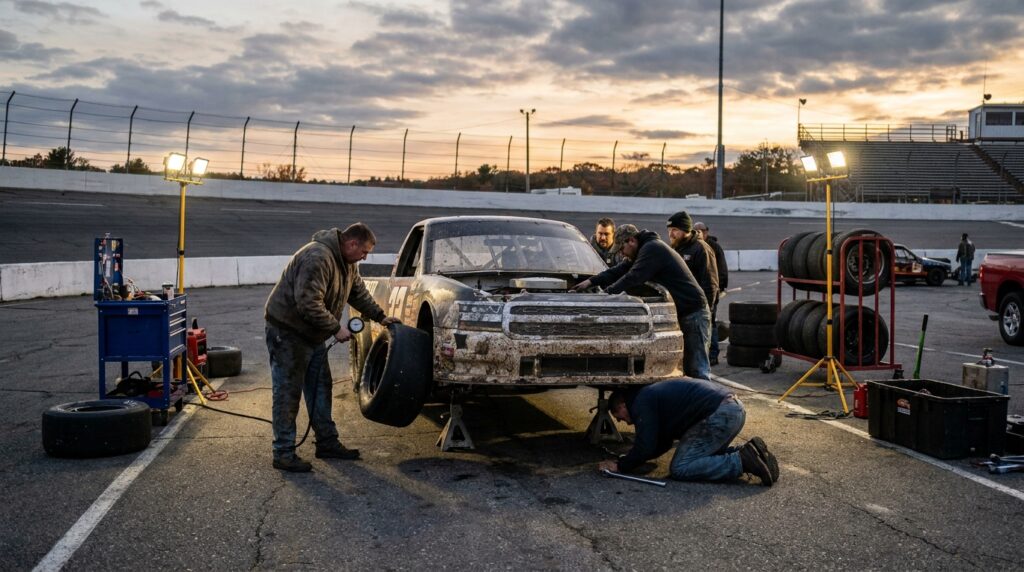
The September 5 result should not be treated as an isolated scorecard. It is part of a larger late-season picture. Fans should watch whether Lineham can convert this win into continued momentum, whether Silva can turn front-row speed into a victory, and whether Varricchio, Coutu, Palamar, and the rest of the field can close the gap or create a new result the next time Trucks return to the program.
Teams can use every late-season race as data: where the truck was strongest, whether it gained or lost time in traffic, and how its balance held up. Local budgets may be smaller than national programs, but the process is similar—gather information, identify weaknesses, make targeted changes, and return better prepared.
Three Lessons From the Waterford Result
First, passing potential matters. Lineham’s move from sixth to first on the result sheet reinforces the value of a truck that can compete in traffic instead of relying entirely on clean air. Second, starting near the front still matters. Silva and Varricchio converted first- and second-place starts into podium finishes, showing that qualifying and heat-race performance remain important building blocks. Third, depth matters. With Coutu advancing from fifth to fourth and Palamar moving from seventh to fifth, the leading group included multiple trucks capable of improving their position.
Those lessons also make the division easier for new fans to understand. Truck racing is not only about raw horsepower. Drivers balance braking, corner speed, throttle application, traffic, and risk. The fastest-looking truck for one lap is not automatically the feature winner; the race rewards speed plus decision-making.
Local Results Feed the Bigger New England Racing Story
The New England motorsports community is strongest when local results are treated as part of a connected story. A Saturday-night Waterford feature can introduce fans to a driver. A strong season can create sponsorship opportunities. A regional series appearance can expose that driver to a wider audience. Over time, those steps are how racing careers, team identities, and fan loyalties are built.
For official confirmation of the September 5 finishing order, fans can review the New London-Waterford Speedbowl September 5, 2026 results. The published Truck A Feature shows Ryan Lineham first, Mason Silva second, Cameron Varricchio third, Jake Coutu fourth, and Chris Palamar fifth.
The bigger takeaway is simple: local truck racing continues to give New England fans meaningful competition to follow. Lineham’s September 5 victory is the latest example of why the division deserves attention. It combines local talent, close short-track racing, changing track position, and the possibility that any strong team can turn a good starting spot into a memorable night.
As the 2026 season moves deeper into September, fans can support the sport by following results, learning the drivers, attending races, and sharing regional stories. National truck racing may generate bigger headlines, but the foundation is still built on nights like this at Waterford—local teams, local fans, and racers fighting for every position.