
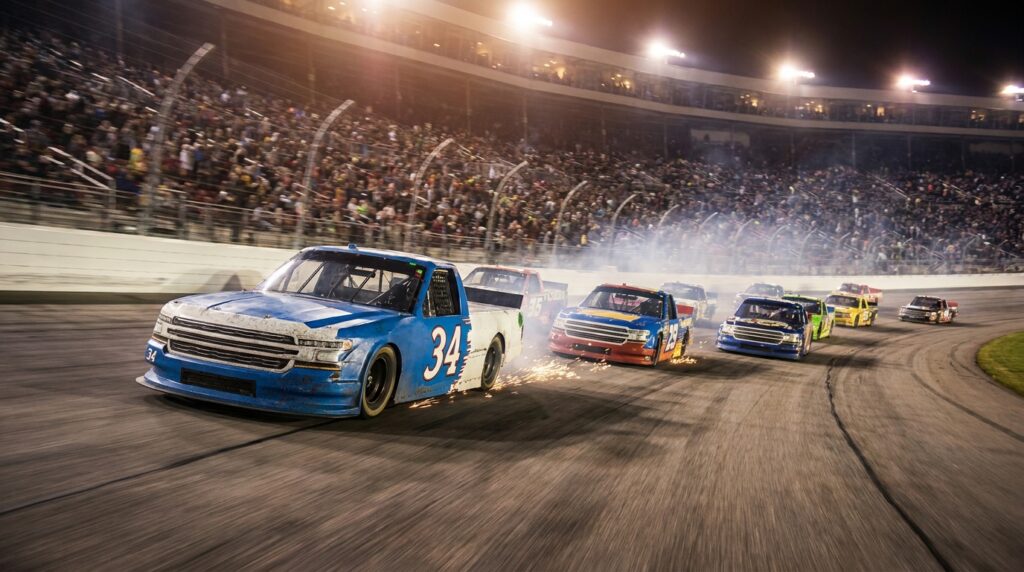
The 2026 NASCAR Craftsman Truck Series regular season is over, and the championship fight is officially down to 10 drivers. After 18 points-paying races, the series now moves into a seven-race Chase beginning September 17 at Bristol Motor Speedway and ending November 6 at Homestead-Miami Speedway.
For New England truck racing fans, the championship story has an especially strong connection to the region. New Hampshire Motor Speedway hosted the August 22 regular-season finale, where Layne Riggs won in double overtime, captured his sixth victory of the year, and secured the No. 1 seed for The Chase. Tyler Ankrum also survived late brake trouble to claim the 10th and final championship position.
The field is now set: Layne Riggs, Kaden Honeycutt, Chandler Smith, Christian Eckes, Gio Ruggiero, Ty Majeski, Grant Enfinger, Daniel Hemric, Ben Rhodes, and Tyler Ankrum will compete for the title. Unlike the elimination format NASCAR used in recent seasons, the restored 2026 Chase keeps all 10 championship-eligible drivers in the fight for all seven races. The eligible driver with the most points after the finale becomes champion.
That makes consistency more important than ever. One win can create a major points swing, but no single race automatically advances or eliminates a driver. Every stage and finishing position can influence the final championship total.
Who Enters the 2026 Truck Series Chase With the Advantage?
NASCAR reset the championship field after the regular season, but the reset rewards drivers based on their regular-season standings. The No. 1 seed starts The Chase with 2,100 points. Second begins with 2,075, third with 2,065, and the remaining seeds descend in five-point increments through 10th at 2,030.
That gives Riggs a 25-point advantage over second-seeded Kaden Honeycutt before Bristol. It rewards sustained regular-season performance, but in a seven-race title fight, the cushion is far from comfortable.
Layne Riggs Carries the Biggest Cushion Into Bristol
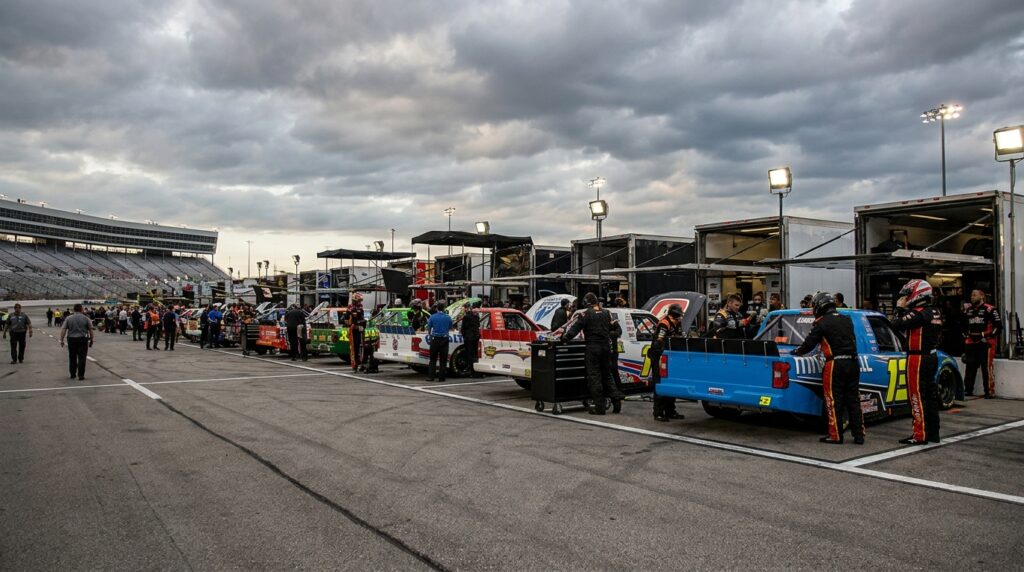
Riggs enters The Chase as the clear benchmark. The Front Row Motorsports driver finished the regular season with six victories, 10 top-five finishes, 11 top-10 finishes, four poles, and 598 laps led through 18 races. His New Hampshire victory was not just another trophy; it confirmed the regular-season championship and gave him the strongest possible starting position for the final seven races.
New England fans saw that momentum firsthand at the Magic Mile. Riggs survived a demanding New Hampshire race and double overtime to close the regular season on top. Readers who followed our earlier preview of the 2026 Truck Series finale at New Hampshire already know why the Loudon race carried unusual pressure this season. Now that the checkered flag has fallen, the result has directly shaped the championship standings.
The New Points System Rewards the Entire Regular Season
The 2026 format changes the way teams must think about a championship. NASCAR increased the value of a race win to 55 points while keeping the traditional points awards for most other finishing positions and stage results. The larger reward makes winning especially valuable, but The Chase is still ultimately a cumulative points contest.
That means a driver cannot rely on a single dramatic victory and ignore the rest of the schedule. A strong Bristol result can be erased by problems at Kansas. A poor road-course race at Charlotte can be recovered with big performances at Phoenix and Talladega. The championship rewards teams that can combine winning speed with durability and consistent execution.
New Hampshire Made the National Chase a New England Story
The 2026 regular-season finale gave the Northeast a direct role in determining the championship field. New Hampshire Motor Speedway did more than host another national event; it decided who would carry momentum into The Chase and who would miss the cut entirely.
Ankrum provided the biggest bubble story. Despite brake trouble, he finished well enough to secure the final Chase position. Stewart Friesen finished fourth at New Hampshire but missed the championship field by seven points, while Jake Garcia fell 11 points short. That is a sharp reminder of how much a full regular season matters under the new format.
For regional fans, the connection also reinforces the opportunity described in our feature on how the 2026 truck racing boom can grow New England short-track racing. When a nationally significant championship moment happens in Loudon, it gives local tracks, drivers, teams, and racing media a chance to bring new attention to truck competition throughout New England.
Veterans and Rising Contenders Give the Field Real Depth
Riggs may begin first, but this is not a one-driver championship. Honeycutt enters second, Chandler Smith third, Christian Eckes fourth, and Gio Ruggiero fifth. Behind them are Ty Majeski, Grant Enfinger, Daniel Hemric, three-time Truck Series champion Ben Rhodes, and Ankrum.
The field mixes rising contenders with experienced veterans. Some are building momentum toward a breakout title, while others know how to manage long seasons, changing conditions, mechanical problems, and championship pressure.
Experience Versus Momentum Could Define the Chase
A seven-race points battle creates a different kind of pressure than a short elimination round. Veteran drivers such as Rhodes and Enfinger understand the importance of taking what a race gives them. They know that a fifth-place finish on a difficult night can be more valuable than forcing a risky move for second and ending up with a damaged truck.
At the same time, momentum matters. Riggs has won often enough in 2026 to prove that his speed works across different track types. Honeycutt, Smith, Eckes, Ruggiero, Majeski, Hemric, and Ankrum all have seven races to create their own run. Because there are no eliminations, a contender who falls behind early still has time to recover if the team can produce strong finishes later.
Why the Seven-Race Chase Will Test Every Kind of Truck Team
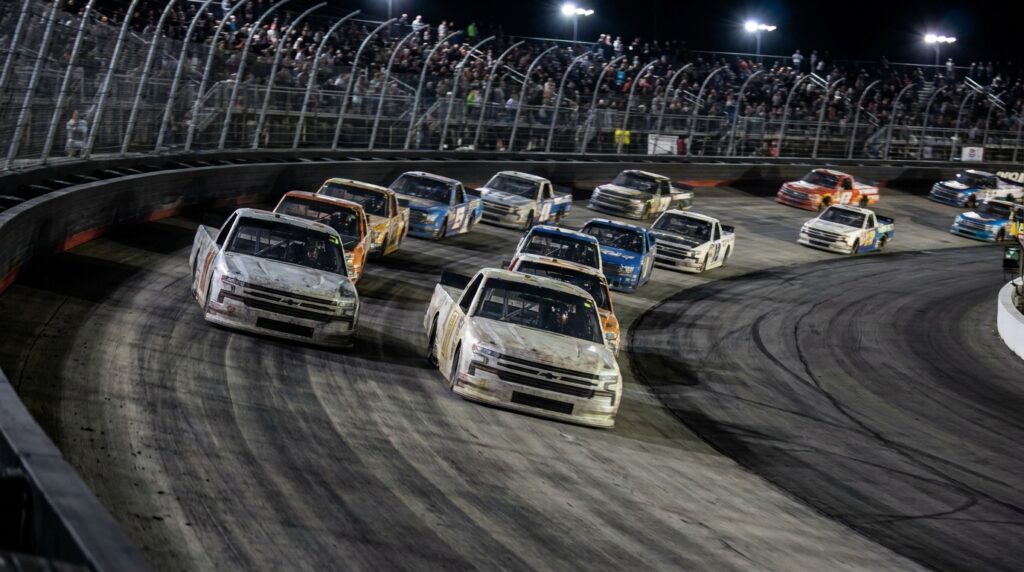
The championship schedule is deliberately varied. Bristol opens The Chase on September 17, followed by Kansas on September 26, the Charlotte Motor Speedway Roval on October 9, Phoenix on October 16, Talladega on October 23, Martinsville on October 30, and the championship finale at Homestead-Miami on November 6.
That mix prevents teams from building a championship around one specialty. Bristol demands short-track aggression, Kansas tests intermediate-track speed, Charlotte adds road-course precision, Phoenix rewards technical execution, Talladega introduces drafting uncertainty, Martinsville brings another short-track fight, and Homestead-Miami closes the season with tire management and changing racing lines in play.
Why Bristol Can Shape the Entire Championship Run
Bristol is an appropriate opening test because the half-mile track compresses the field and punishes mistakes quickly. NASCAR lists the September 17 Truck race for 250 laps, with stages ending at laps 65 and 130 before the final run to the finish. Track position, restarts, pit execution, and avoiding contact can all produce major points consequences.
Riggs also enters as the defending winner of the Bristol Truck event, giving the top seed another reason to be confident. But Bristol rarely guarantees anything. A fast truck can become trapped in traffic, a minor incident can create major damage, and a poorly timed caution can change strategy instantly.
No Eliminations Means a Bad Night Hurts Without Ending the Season
This is where the restored Chase becomes especially interesting. Under the previous elimination model, one disastrous race near a cutoff could effectively end a championship run. In 2026, every Chase driver remains eligible through Homestead. A Bristol problem would create a points deficit, not an automatic exit.
Teams can therefore treat adversity differently. Instead of turning every setback into a must-win emergency, they can limit the damage and recover later. But mistakes are not harmless: with only seven races, losing 30 or 40 points to a rival can still create a difficult gap.
For newer fans trying to understand why setup, race craft, safety, and consistency matter so much in truck competition, our beginner’s guide to starting truck racing in New England provides a grassroots perspective on many of the same fundamentals national teams must execute at a much larger scale.
The equation
The official NASCAR Chase format guide confirms that the 2026 championship is based on cumulative Chase points, with no eliminations and the highest-scoring eligible driver crowned champion after the season finale.
The equation is simple but difficult to execute: score more points than the other nine contenders across seven very different tracks. Riggs owns the early advantage, but one dominant weekend or one mechanical failure can quickly reshape the title picture.
For New England fans, the championship already has a regional chapter because the field was finalized at New Hampshire. The next chapter begins under the lights at Bristol on September 17. From there, every stage and every finish will move the championship closer to Homestead-Miami, where seven races of pressure will finally produce the 2026 NASCAR Craftsman Truck Series champion.