
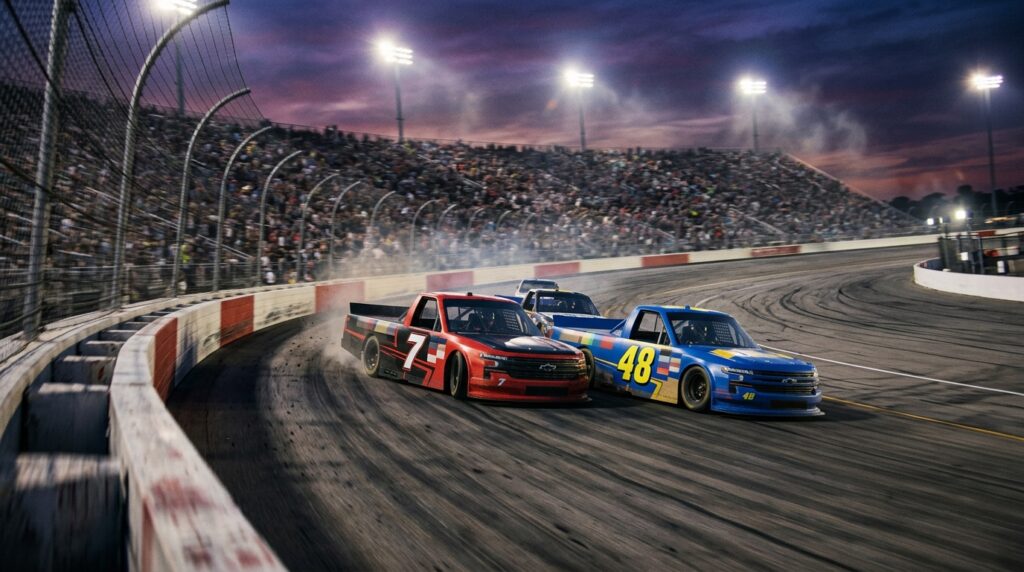
The NASCAR Truck Series Charlotte 2026 race arrives at a crucial moment in the championship fight. On Friday, October 9, the NASCAR Craftsman Truck Series is scheduled to return to Charlotte Motor Speedway for the Ecosave 200. With the regular season complete and the Chase underway, drivers are no longer simply collecting results. They are fighting to protect championship positions as the season approaches its November finale.
For New England truck racing fans, the Charlotte race provides another opportunity to follow the national competition after an unforgettable summer at New Hampshire Motor Speedway. The August race in Loudon brought dramatic overtime restarts, a victory for Layne Riggs, and an exciting conclusion to the regular season. Now the focus shifts toward the remaining Chase races and the drivers who can maintain their momentum.
Charlotte presents a different challenge from the shorter ovals that many New England fans know best. Its 1.5-mile configuration rewards sustained speed, aerodynamic performance, disciplined pit stops, and careful management of traffic. Teams must find the right combination of balance and consistency while remaining prepared for late cautions and unpredictable restarts.
Whether you follow national NASCAR competition or local truck racing at Waterford Speedbowl, understanding the strategy behind Charlotte can make the event more interesting. This preview examines the track, race tactics, championship pressure, and lessons that regional competitors can learn from the national series.
Why Charlotte Motor Speedway Is Important to the 2026 Truck Series Chase
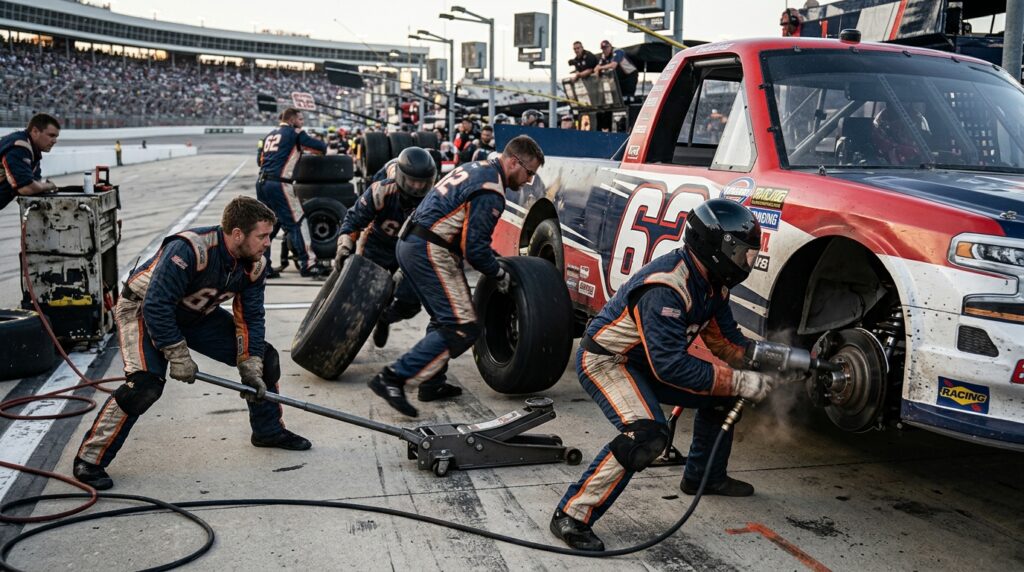
Charlotte Motor Speedway has a long association with American stock car racing. Its main oval features 1.5 miles of pavement and 24 degrees of banking in the turns. Those characteristics make it an intermediate-speedway test where aerodynamic efficiency and handling over a sustained run can be more important than outright acceleration.
The scheduled Ecosave 200 covers 167 laps and approximately 250.5 miles. That distance creates opportunities for teams to make strategic decisions about fuel, tire wear, and adjustments during pit stops. A truck that handles well for five laps may behave differently after a longer period on the track.
The event also arrives after the Chase races at Bristol and Kansas. NASCAR lists Charlotte as the next scheduled race in the championship sequence. For drivers pursuing the title, consistency is particularly valuable because a poor result can complicate the points situation heading toward Talladega, Martinsville, and Homestead-Miami.
How Charlotte’s layout changes the racing strategy
At short tracks, drivers often spend much of a race managing braking, corner rotation, and close physical battles. Charlotte introduces additional aerodynamic considerations because trucks travel at higher speeds and experience sustained loading through the banked corners.
Drivers must judge how their vehicles behave in clean air and behind traffic. A truck that turns comfortably alone may develop handling problems when following competitors. Teams monitor those changes and look for opportunities to adjust the vehicle during pit stops.
The racing line also changes as the event progresses. Drivers may experiment with different approaches to corner entry and exit to maintain momentum. Finding a lane that provides stable grip can be important when passing becomes difficult.
Clean air and track position can shape the outcome
Clean air refers to the relatively undisturbed airflow experienced by a truck running ahead of other vehicles. Aerodynamic conditions can influence stability, especially in corners where drivers depend on consistent front-end grip.
A driver running near the front may enjoy a handling advantage, while another competitor traveling through traffic may experience additional challenges. This makes qualifying, restarts, and pit-road execution valuable parts of the overall strategy.
Track position alone does not guarantee success. A team must still maintain tire performance, avoid penalties, and adapt when traffic or weather changes the available racing line.
Why tire management matters over longer runs
Every lap places stress on the tires through acceleration, braking, and cornering forces. As temperatures increase and the tires wear, the truck’s balance can change. Drivers sometimes report that the front end becomes less responsive or that the rear tires lose traction when power is applied.
Teams evaluate these patterns during practice and previous race preparation. They must determine whether adjustments should favor early speed or stability over longer runs.
A well-balanced truck allows the driver to maintain competitive lap times without forcing the vehicle through the corners. Excessive sliding can increase wear and make the truck more difficult to control later in the run.
These principles also matter in regional competition. The vehicles and track dimensions are different, but understanding tire behavior remains essential. Our Waterford Speedbowl truck racing fan guide explains how corner entry, racing lines, and restarts influence local races.
Championship pressure changes driver decisions
As the Chase progresses, drivers must consider more than the position immediately ahead. They also need to understand the championship standings, potential points gains, and consequences of an accident.
A competitor who needs a strong finish may approach a late restart differently from someone protecting an established points advantage. An aggressive three-wide maneuver could produce several positions, but it might also end the race.
Team communication becomes increasingly important. Crew chiefs monitor changing conditions and help drivers understand when patience provides more value than risk. Spotters communicate about nearby traffic, available lanes, and developing situations.
Fans following the series should watch how different teams respond when a caution occurs near the finish. Tire decisions, pit stops, restart lane selection, and driver aggression can rapidly reshape the running order.
Late cautions can change everything
Late-race cautions create difficult choices. A team running near the front may stay out to preserve track position, while competitors farther behind may consider fresh tires if permitted by the situation and race procedures.
Neither decision is automatically correct. The right call depends on the remaining distance, tire condition, available sets, pit-road timing, and how much track position a stop could cost.
Restarts also create opportunities for unexpected contenders. A driver who struggled during a long run may improve when the field is compressed. Others may lose momentum after choosing a less favorable lane.
New England fans witnessed how unpredictable this can become during the Layne Riggs victory at New Hampshire, where two overtime restarts helped produce a memorable regular-season finale.
What New England Truck Racing Fans Should Watch at Charlotte
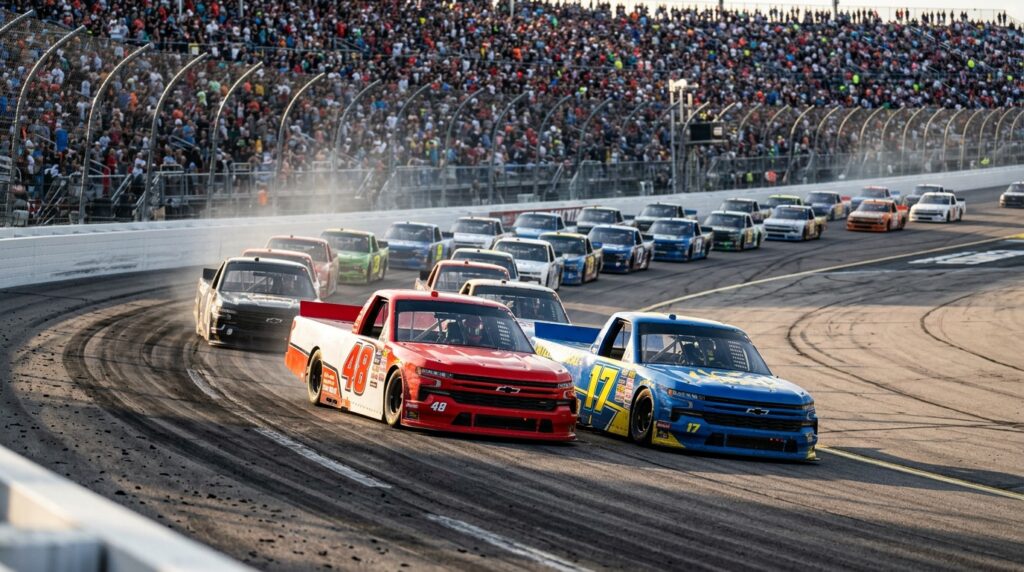
The Charlotte event offers more than a championship storyline. It also gives regional fans an opportunity to observe racing techniques that apply at almost every competitive level.
Watch how drivers position their trucks on corner entry. Pay attention to whether a competitor gains time by entering aggressively or by slowing slightly to achieve a stronger exit. Notice which trucks can maintain pace after several consecutive laps.
Pit-road operations provide another important lesson. A strong race truck can lose valuable track position through slow stops, communication problems, or penalties. Successful teams practice their procedures so that every crew member understands the assignment.
These ideas carry into grassroots racing, where budgets are smaller but preparation still separates consistent competitors from teams that repeatedly experience preventable problems.
Lessons that local short-track teams can apply
Regional teams cannot simply copy a NASCAR national-series setup. Their rules, tires, engines, chassis, and available resources may differ significantly. However, the approach to preparation is transferable.
Start with clear observations. Drivers should explain when a handling problem occurs, rather than describing the truck only as fast or slow. Crew members can record tire condition, temperatures where permitted, setup changes, and performance trends.
Consistent documentation helps teams avoid repeating unsuccessful adjustments. It also makes testing more useful because every change has a clear purpose.
Young drivers can learn from how national competitors manage pressure. A clean finish is often more valuable than a reckless attempt that damages equipment. The ability to remain patient in traffic is a skill developed through experience.
Anyone interested in entering the sport can review our beginner’s guide to starting truck racing in New England for advice on preparation, rules, and joining a local racing community.
Charlotte also illustrates the value of teamwork. Drivers receive attention, but performance depends on mechanics, fabricators, engineers, crew chiefs, and everyone responsible for getting a competitive vehicle onto the track.
That development path is familiar in New England. Our feature on Connecticut native Scott Zipadelli explains how regional racing experience can help build a career at the national level.
For official schedule updates, race details, and results, visit the 2026 NASCAR Craftsman Truck Series schedule. Fans should check the latest information before the event because race arrangements can change.
The NASCAR Truck Series Charlotte 2026 race provides another important test of championship preparation. Whether the decisive moment comes from tire management, pit strategy, traffic, or a late restart, the event offers valuable lessons for both national and grassroots racing.
For New England supporters, following Charlotte also strengthens the connection between local short-track competition and the broader world of NASCAR. Different tracks create different challenges, but the central ingredients remain the same: capable drivers, prepared teams, smart decisions, and the determination to reach the checkered flag.