
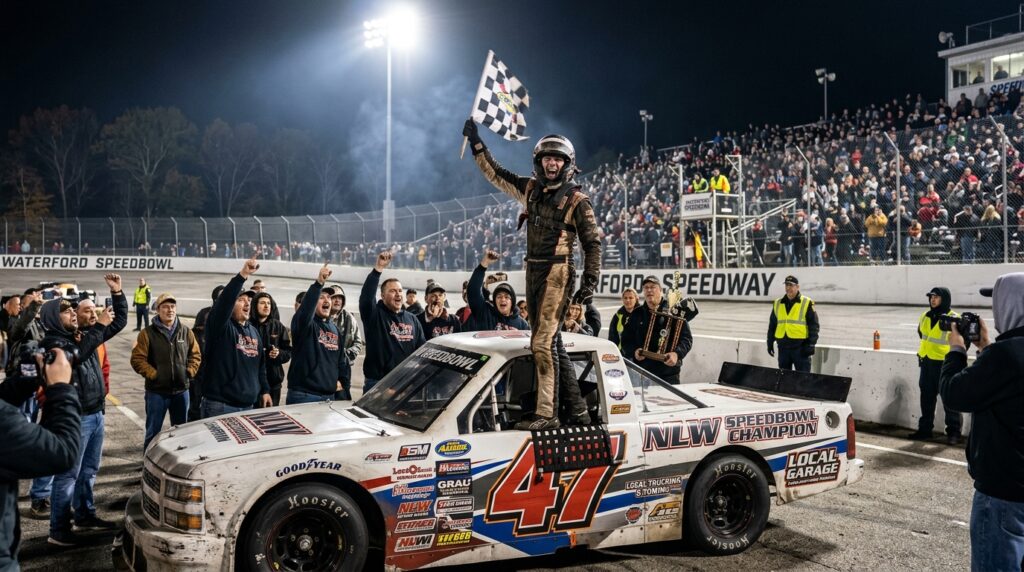
The 2026 Waterford Truck championship ended with two different drivers having reasons to celebrate. Ryan Lineham officially secured the season title at New London-Waterford Speedbowl, while Tyler Chapman closed the year with a victory in the 25-lap Truck feature during Finale Weekend.
The October 4 race provided exactly the kind of ending that makes New England short-track racing worth following. The championship had already moved toward Lineham, but the final feature still delivered trouble, passing, pressure, and a late battle for the win.
Chapman started sixth and eventually worked his way past Mason Silva. Lineham survived an early incident and finished third, which gave the champion another podium result to close the season.
For fans who followed the Truck division all summer, the result brought several storylines together. Lineham completed a championship season. Chapman ended the year with momentum. Silva showed strong speed before mechanical trouble hurt his finish.
The finale also gave local teams a clear picture of what they can build on before the next season begins.
How Ryan Lineham Secured the 2026 Waterford Truck Championship
Championships at a short track rarely come from one spectacular night. They usually come from repeated strong performances, good decisions, clean finishes, and the ability to recover when a race becomes difficult.
Lineham’s 2026 season followed that pattern.
Earlier in the year, the No. 19 truck regularly appeared near the front. One clear example came on September 5, when Lineham started sixth and won the Truck feature ahead of Mason Silva and Cameron Varricchio.
Fans can revisit that race in our September 5 Ryan Lineham Waterford victory recap.
The championship adds more meaning to those individual results. A feature win can show speed. A season title requires drivers and teams to repeat that performance across changing track conditions, starting positions, cautions, mechanical risks, and traffic.
Finale Weekend Tested the Champion One More Time
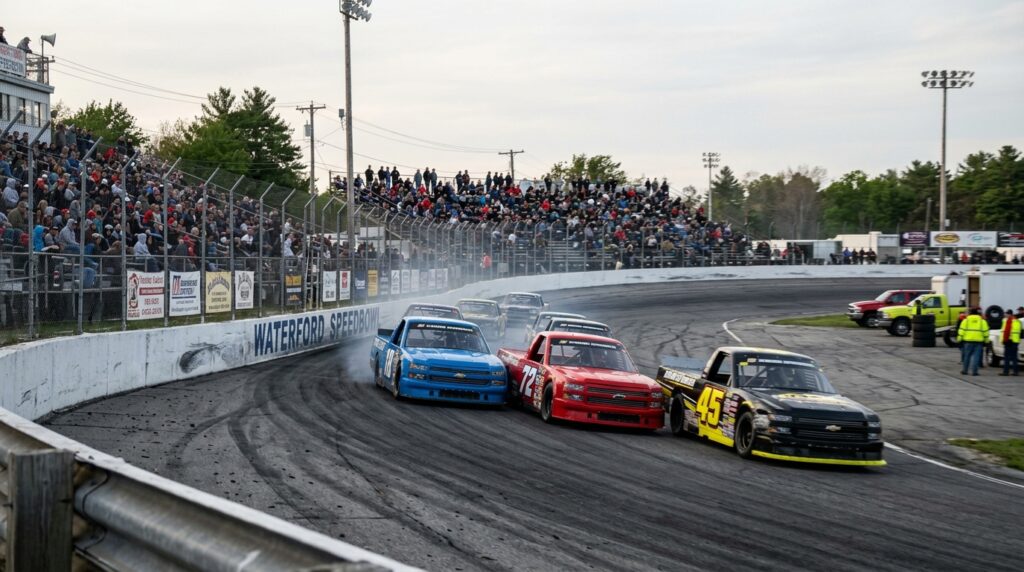
Waterford’s Finale Weekend took place across October 3 and 4, bringing several divisions together for the end of the regular racing season.
The Truck field included familiar names such as Lineham, Tyler Chapman, Mason Silva, Andrew Pellegrini, Charles Beal, Jake Coutu, Joe Bavolacco, Brad Caddick, Dylan Cabral, Tom Jones Jr., and Jaysin Beal.
Heat racing on Saturday showed that several trucks had enough pace to become a factor in the main event. Coutu won the first heat. Chapman came from fifth to win the second.
That set up an interesting Sunday feature because the strongest trucks were not all starting at the front.
An Early Crash Made the Finale Difficult Immediately
The feature changed almost as soon as it started.
A lap-one incident involved several trucks and ended the weekend early for Jaysin Beal and Jake Coutu. Lineham was also caught in the trouble.
That is the type of moment that can ruin a championship contender’s day even when the title itself is nearly decided.
Short-track racing leaves little time to react when something happens directly ahead. Trucks run close together, especially during early laps and restarts. One spin can quickly become a larger incident.
Lineham continued despite the damage and worked his way back into the fight.
For newer fans, these situations explain why finishing races matters so much during a championship season. Raw speed helps, but teams must also repair damage, adjust the truck, and keep collecting strong finishes.
Our Waterford Speedbowl truck racing fan guide explains what to watch during restarts, corner entry, close traffic, and feature racing.
Tyler Chapman Had to Work for the Finale Victory
After the early incident settled, Mason Silva became the truck to beat.
Silva built a lead while Chapman worked forward. Catching the leader was one problem. Finding a clean way past him was another.
Chapman repeatedly tested the outside lane during the middle of the feature. When the move did not develop, he returned to line rather than forcing a low-percentage attempt.
With six laps remaining, the battle changed.
Chapman tried the inside. Contact occurred during the fight, and Chapman came away with the lead. Once he reached clean air, he pulled away.
Silva’s strong run then suffered another setback. Mechanical trouble dropped him to ninth on the final lap.
Chapman took the win, while Andrew Pellegrini finished second. Lineham recovered to third, with Charles Beal and Joe Bavolacco completing the top five.
The finishing order showed why the feature should not be reduced to one late pass. Several teams had different races. Chapman converted patience into a victory. Pellegrini stayed in position to benefit. Lineham recovered from early trouble. Silva showed front-running speed but did not get the finish his performance initially suggested.
What Lineham’s Championship Says About Winning at a Short Track
Local championships reward a different skill set from one-off special events.
A driver cannot build a title around one great weekend. Poor finishes have consequences because the same competitors return throughout the season.
Teams must prepare a truck that works in different temperatures and track conditions. Drivers must know when to attack and when to protect a good points night.
Mechanical reliability matters too. A truck that is fast but repeatedly fails to finish becomes difficult to build a championship around.
Lineham’s title is therefore valuable for young racers to study.
Consistency Is Often More Valuable Than One Perfect Race
Drivers entering short-track racing sometimes focus almost entirely on victories. Wins matter, but the points table rewards the entire season.
A second-place finish can be useful. So can a fourth-place finish on a night when the truck never feels perfect.
Recovering to third after an early finale incident is another example.
The best championship teams reduce bad nights. They find ways to turn a possible DNF into a finish. They solve small problems before they become major ones. They also understand that a championship is built one event at a time.
Anyone thinking about competing can read our beginner’s guide to starting truck racing in New England. Learning race craft and preparation before spending heavily on equipment can save both time and money.
What the 2026 Finale Means for New England Truck Racing
The end of a local season is not only a time to celebrate the champion. It is also when teams begin evaluating what worked.
Chapman’s finale victory gives his team positive momentum heading into the offseason. Silva’s speed gives the No. 31 team something useful to build on despite the mechanical problem. Pellegrini’s runner-up finish shows another team capable of challenging near the front.
Lineham enters the offseason with the strongest possible result: a championship.
That depth is good for the Truck division because predictable racing is rarely the best racing. Fans want recognizable contenders, but they also want several drivers capable of winning.
The Offseason Starts With Notes From the Final Race
Teams can learn a great deal from one difficult finale.
They can review tire wear, handling changes, restart performance, braking, corner entry, and how the truck behaved in traffic.
Mechanical failures deserve special attention. A part that survives most of the year can still fail during the final laps. Teams need to decide whether that was random bad luck or a sign that a component, maintenance schedule, or setup needs attention.
Drivers can review decisions too.
Chapman’s repeated outside attempts showed patience. He did not force every opening. That matters on a short track where unnecessary contact can end both drivers’ races.
The Next Championship Can Start Before Opening Night
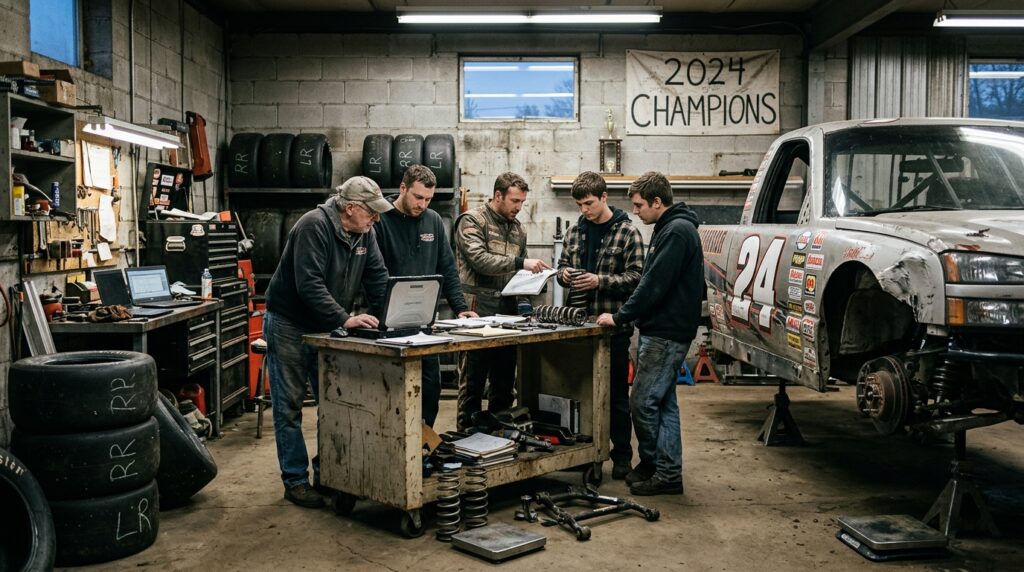
The work for next season begins long before the first green flag.
Teams can inspect chassis components, organize spares, improve safety equipment, review setup notes, and build a realistic budget.
Drivers can work on fitness, communication, sponsor relationships, and race footage.
Smaller teams do not need national-level budgets to become more organized. They need clear priorities.
Better preparation can also help the entire New England truck-racing scene grow. Our 2026 truck racing boom guide looks at why regional teams can benefit from growing national interest in pickup-based motorsports.
The 2026 Waterford Truck championship ultimately belongs to Ryan Lineham, but Finale Weekend showed that the division has several drivers worth watching.
Tyler Chapman won the final feature. Andrew Pellegrini finished second. Lineham recovered to third. Mason Silva showed winning pace before late mechanical trouble changed his result.
That combination gives fans plenty to discuss during the offseason.
Lineham’s championship also offers a simple lesson. Short-track titles come from more than outright speed. Teams need preparation, reliability, smart decisions, and the ability to recover when a race goes wrong.
For official 2026 Finale Weekend results and track updates, visit the New London-Waterford Speedbowl official finale report.