
The Pressure Cooker: The Ultimate Win-and-You’re-In Sandbox
 When New Hampshire Motor Speedway hosted races in June, drivers on the playoff bubble could afford to be methodical. A bad handling package or a mid-race spin was a setback, certainly, but one that could be corrected over the subsequent two months of the regular season. There was time to recover, test, and accumulate points elsewhere.
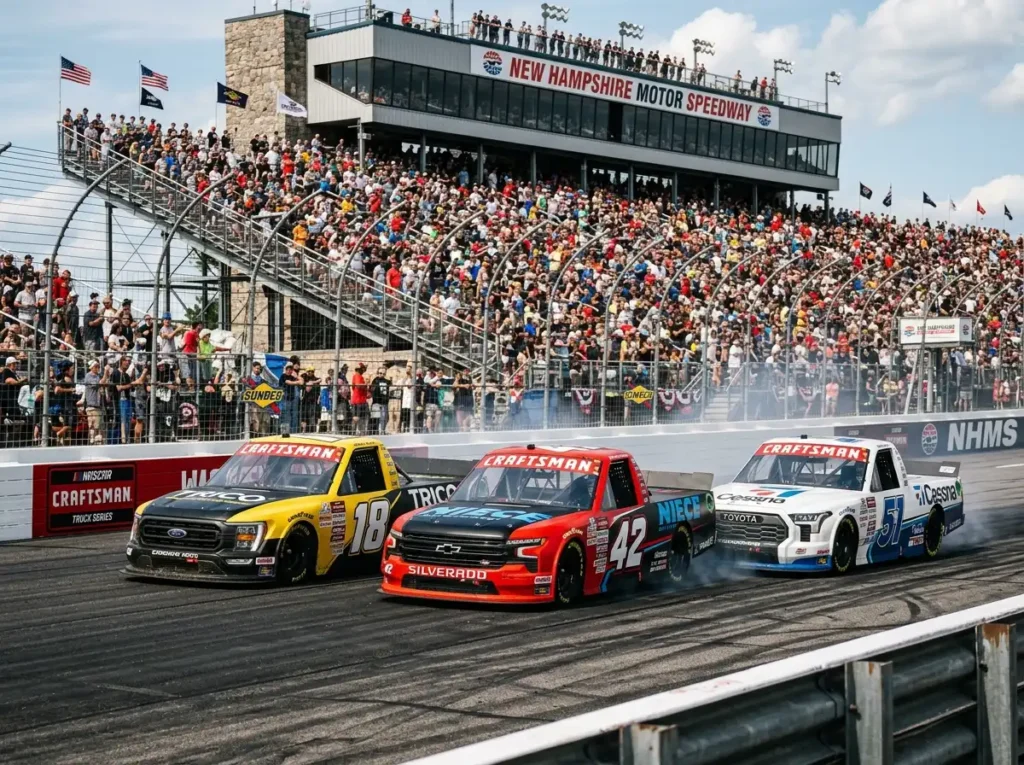
On August 22, that luxury does not exist. As the final race before the postseason cutoff, the narrative surrounding the New Hampshire Motor Speedway Truck Series grid changes instantly. For drivers sitting just inside the top ten in points, the race becomes a defensive nightmare. For those on the outside looking in, it is a chaotic, desperate scramble where the only metric that matters is the checkered flag.
History has proven that when you give desperate, talented young drivers a short-track-style environment with a playoff spot on the line, chaos follows. The flat, wide corners of Loudon invite aggressive dive-bombs and heavy ambient contact. Drivers who have nothing to lose will use their front bumpers to displace rivals, knowing that an intentional check-up from a competitor is a small price to pay for a ticket into the playoffs. Expect restarts in the final 20 laps to be some of the most aggressive, breathtaking segments of racing witnessed all year.
The Thermal Challenge: Surviving Late-August Track Dynamics
Beyond the psychological pressure of the playoff cutoff, the physical characteristics of the racetrack itself will undergo a dramatic transformation due to this August shift. June in New Hampshire can be warm, but late August brings a specific kind of heavy, sustained thermal load to the asphalt that will completely overhaul how engineers approach their short-track setups.
Loudon is notorious for being a driver’s track, largely because it lacks the steep banking found at venues like Bristol or Dover. Without high banking to catch the trucks and build artificial downforce, grip is at an absolute premium. The trucks must rely heavily on mechanical grip provided by the suspension components and tire compound.
When the sun beats down on the Magic Mile in late August, track temperatures will easily soar past 120 degrees Fahrenheit. This intense heat causes the asphalt to secrete oils, turning a normally predictable racing line into a slick, treacherous surface. As the track temperatures rise:
- Tire Degradation Accelerates: The Goodyear rubber will blister and wear at a significantly higher rate, forcing crew chiefs to evaluate whether to take four tires or gamble on two-tire track position plays late in the race.
- Slicker Racing Grooves: The track will become greasy, reducing side-bite and making it incredibly easy for drivers to wash up the track in the center of turns 1 and 3, opening the door for under-the-spoiler passing maneuvers.
- Brake Management Becomes Vital: Heavy trucks slowing down for Loudon’s flat corners generate immense brake heat. In the August mugginess, cooling these systems becomes twice as difficult, risking fluid boil and pedal fade in the closing stages.
The Strategic Evolution: Pit Road Crucial Decisions
Because track position is incredibly difficult to maintain at Loudon, the burden of performance shifts heavily onto the pit crews and the war wagons. Crew chiefs will no longer have the luxury of playing the long game. Every decision made during the Team EJP 175 will be amplified by the looming playoff cutoff.
We are likely to see highly polarized strategies play out on pit road. Stage points will be fiercely contested early in the event by those trying to lock themselves in on mathematical safety. Conversely, teams that are deep in the points standings will almost certainly short-pit the stages, sacrificing those minor points in exchange for restarting on the front row for the final segment.
This creates a fascinating tactical chess match. Do you bank the guaranteed points in Stage 1 and 2, or do you sacrifice them entirely to ensure you have clean air when the track is at its absolute slickest in the final laps? With the track surface punishing tires so severely under the August heat, executing a flawless green-flag pit stop could be the difference between a championship run or going home empty-handed.
The Regional Fallout: What This Means for New England Race Fans
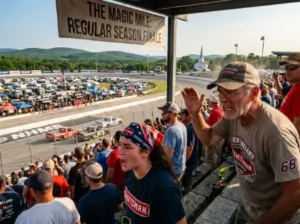
While the national teams sweat over setups and playoff points, the shift to late August brings a completely different energy to the local New England short-track racing ecosystem. For decades, the local racing community has viewed the national NASCAR weekend as the crown jewel event of the region.
Moving the date to August repositions the event as the ultimate summer-ending celebration for race fans across Connecticut, Massachusetts, Maine, and New Hampshire. Camping in the infield and surrounding lots will take on a festival-like atmosphere, capitalizing on the peak of the New England outdoor vacation season. It gives local fans a chance to witness intense, regular-season-ending drama right in their own backyard.
Furthermore, this high-profile weekend shines a massive spotlight on regional short-track racing talent and tracking operations. With national media descending upon Loudon to cover the dramatic conclusion of the regular season, the eyes of the entire motorsports community will be locked firmly onto New England, reinforcing the region’s deep-rooted passion and historical importance to the sport of truck racing.
Conclusion: The Ultimate Test of Grit and Grip
The 2026 schedule change has successfully transformed the New Hampshire Motor Speedway Truck Series stop from a standard summer race into an absolute destination event. By combining the natural technical difficulties of a flat, slick mile oval with the desperate psychological pressure of a regular-season finale, NASCAR has ensured that the road to the championship must pass through a crucible in Loudon.
When the green flag drops on August 22, it won’t just be about who has the fastest truck. It will be about which driver can manage their equipment on a blistering track, which crew chief can outsmart the field on pit strategy, and who can survive the inevitable late-race restarts when track positions mean everything. The Magic Mile has always demanded respect, but this August, it demands absolute perfection.