
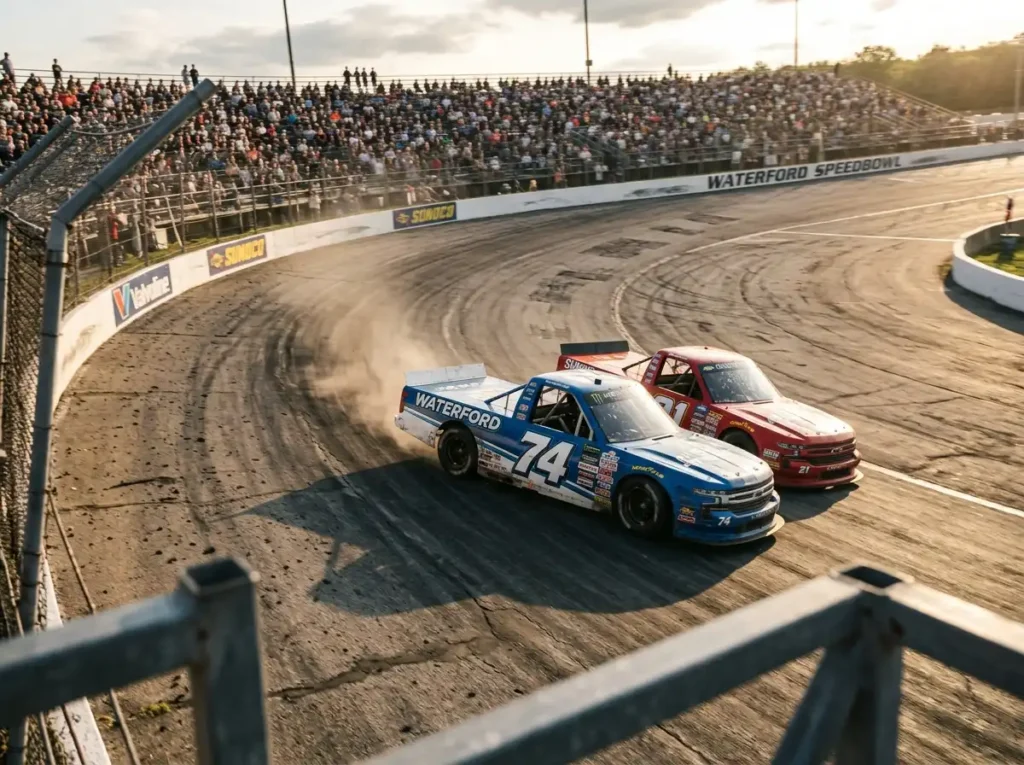
The Evolving Landscape of Short-Track Racing
The 2026 racing season has arrived with a roar, and for those of us deeply entrenched in the world of New England truck racing, the air feels different this year. We are currently witnessing a pivotal shift in how short-track competition is contested. While national headlines often dominate the conversation, the trickle-down effect of aerodynamic and engine regulation changes is reshaping the very fabric of our local series.
For years, the trend in professional motorsports was toward high-downforce packages, designed to keep cars glued to the track. However, the move for 2026 has been a dramatic pivot. By reducing aerodynamic aids and tweaking engine outputs for short-track venues, racing bodies are attempting to solve the age-old problem of “clean air” dependence. For the dedicated teams and drivers in New England, this change is not just technical—it is philosophical.
Understanding the 2026 Shift
The primary philosophy behind the 2026 regulations is simple: make the machines harder to drive. By trimming the rear spoiler height and simplifying the diffuser design, the amount of downforce generated in corners has been noticeably reduced. This forces the driver to rely more heavily on mechanical grip—the raw interaction between the tires, the suspension, and the asphalt.
In the past, high downforce allowed drivers to maintain momentum through corners with less concern for setup nuances. Today, that luxury is disappearing. If you visit our technical resource center, you will find that the best-performing trucks this year are those that have completely overhauled their spring rates and shock packages to compensate for the reduction in rear-end stability.
The 2026 regulations have moved toward a higher-horsepower, lower-downforce configuration. According to NASCAR officials, the goal is to increase the premium on a driver’s throttle control and incentivize more aggressive tire management, effectively changing the strategy required for every short-track event this season.
The Impact on New England Circuits
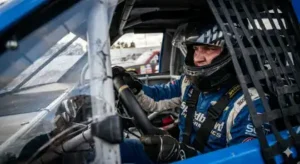 Here in New England, we are lucky to have venues that reward technical prowess. Tracks like the Waterford Speedbowl require a specific type of finesse. When you combine the new, less-forgiving aero package with the unique surfaces of our local tracks, you get a recipe for increased tire degradation.
In 2025, a driver could often “go fast early” and maintain that pace. In 2026, that strategy is proving costly. The reduced aero means that tires are doing more work during mid-corner transitions. Consequently, we are seeing more significant “fall-off” as the race progresses. This is great news for fans, as it creates a wider gap in performance between drivers who manage their equipment and those who burn their tires up in the opening laps.
The Rise of Lane Diversity
One of the most exciting outcomes of these regulatory shifts is the increase in lane diversity. With trucks no longer stuck to a single “fast line” due to aero-stability, drivers are finding success in the high groove and middle lanes. We are witnessing more side-by-side racing than we have seen in the last three years, as the difficulty of the trucks makes holding a single line physically taxing for the driver.
Driver Skill: The Great Equalizer
If there is one thing that the 2026 season has proven, it is that driver skill remains the ultimate equalizer. When the truck is not “doing the work” for you, the individual inputs of the driver—the rhythm of the brake, the smooth roll of the throttle, and the ability to “feel” the track—become the deciding factors.
For those interested in how these professional-level changes are helping our local talent improve, check out our piece on the rising stars of the New England truck scene. It is clear that the drivers who spent their off-season testing and simulating these lower-downforce conditions are currently sitting at the top of the standings.
What This Means for Fans
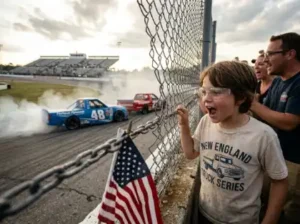 For the spectator, the 2026 season is shaping up to be one of the most unpredictable in recent memory. The days of “processional” racing, where the leader pulls away with ease, are fading. Because the trucks are now more sensitive to turbulent air, the lead truck is no longer untouchable. The ability for a second-place runner to “poke and prod” at the leader’s bumper has increased, and that pressure often leads to the minor, track-changing mistakes that define a memorable race.
We encourage all our readers to check the full 2026 race calendar to see when you can experience this high-stakes, mechanical-grip racing firsthand. The atmosphere at the track has been electric, and the feedback from the community has been overwhelmingly positive regarding the increased competitiveness of the field.
Conclusion
The transition to the 2026 aero and engine packages is a challenge, but it is one that the New England truck racing community is rising to meet. By forcing a return to mechanical fundamentals, the rules are highlighting the incredible talent of our local drivers and bringing the excitement back to the short track.
As we continue to monitor these developments, we want to hear from you. Are you seeing more aggressive driving at your local oval? Does the new package favor your favorite driver’s style? Join the conversation on our community forums and share your thoughts. The 2026 season is just getting started, and there is plenty more racing action ahead.