
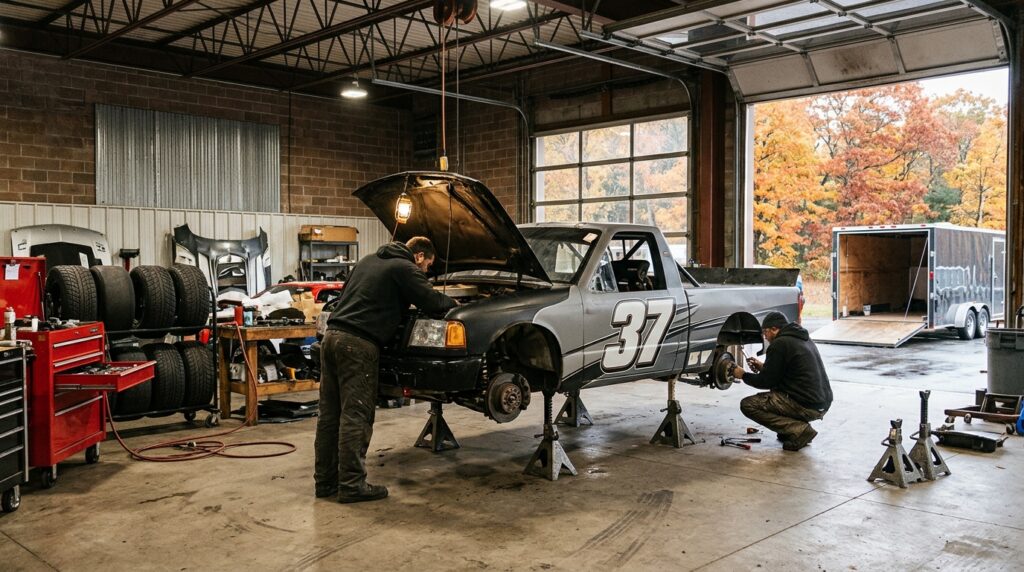
Winter conditions also present challenges for teams storing race trucks in Connecticut, Massachusetts, Rhode Island, New Hampshire, Vermont, or Maine.
Cold temperatures, moisture, limited garage space, and reduced track activity can affect how teams manage their vehicles and equipment.
A good offseason plan involves more than improving horsepower. Safety inspections, rulebook updates, budgeting, and driver development deserve equal attention.
This checklist explains how New England truck racers can approach the months between seasons without rushing into unnecessary purchases.
New England Truck Racing Offseason: Start With a Full Inspection
The most useful offseason work begins with understanding the current condition of the race truck.
Before purchasing upgrades, teams should document damage, wear, maintenance history, and any issues reported during the final races.
Drivers should coordinate with qualified mechanics rather than making assumptions about components they cannot safely inspect.
Review the Chassis, Suspension, Brakes and Tires
Short-track racing places repeated stress on the vehicle through cornering, braking, acceleration, and occasional contact.
Even when a truck finishes the season without an obvious failure, hidden wear may still exist.
Inspect Structural Components Before Buying Upgrades
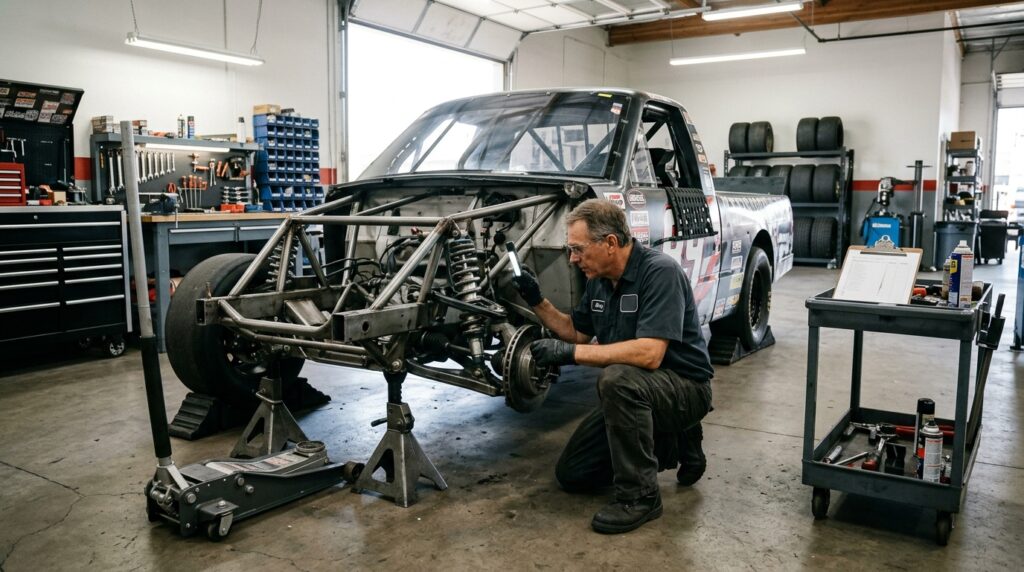
Begin with a careful inspection of the chassis and roll-cage structure by someone qualified to evaluate race vehicles.
Look for visible cracking, deformation, damaged mounts, and changes following previous impacts.
However, visual checks alone may not identify every structural problem.
Professional inspection or appropriate testing may be necessary when damage is suspected.
Do not attempt to straighten or weld safety-critical structures without the required expertise and authorization.
The team’s rulebook may establish repair requirements, approved materials, and inspection procedures.
Consequently, a technically convenient repair may still be prohibited in the competition.
Drivers should also keep records of major incidents and previous repairs.
Those details can help a technician understand where additional inspection is needed.
The offseason is a good time to identify concerns because teams are not facing the immediate pressure of an approaching race night.
Suspension, Brakes and Tire Management
Suspension components deserve attention after months of racing over uneven surfaces and track transitions.
Teams should review wear in approved joints, mounts, bearings, and other accessible parts according to their vehicle’s specifications.
However, suspension systems may contain components requiring specialized tools or safety procedures.
Do not disassemble loaded springs or other high-energy components without appropriate professional training.
Brake inspection is equally important.
Check maintenance records for pads, rotors, fluid service, lines, and previously reported problems.
Brake performance can change substantially when components become overheated or damaged.
Tires should also be inventoried and examined according to manufacturer and competition requirements.
A tire that looks usable may still be unsuitable because of age, damage, or racing regulations.
Teams should confirm whether the series will use the same approved tire specifications in 2027.
Do not invest in an entire inventory until the upcoming rulebook is confirmed.
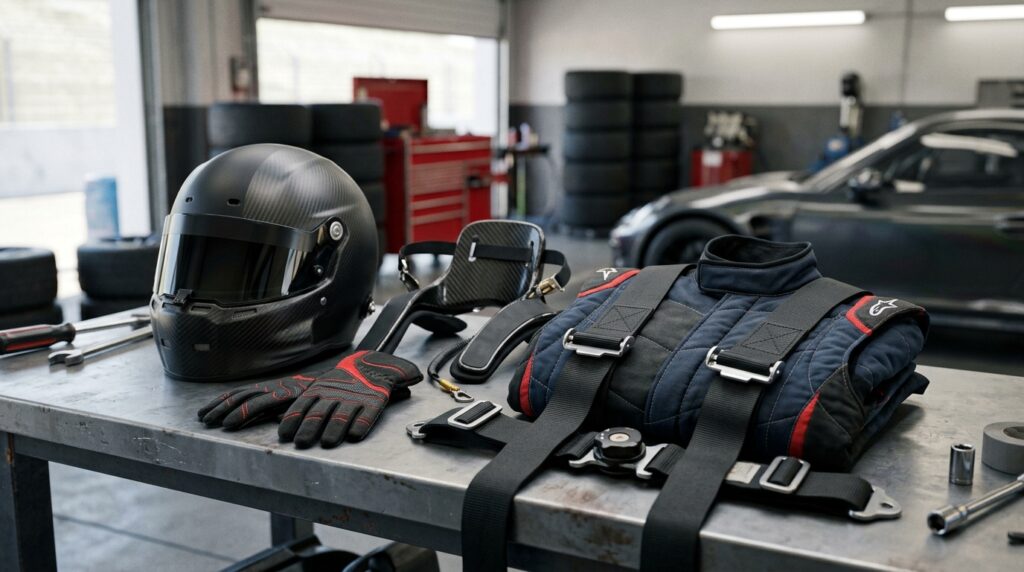
Audit Driver Safety Equipment and Emergency Readiness
Safety equipment should be reviewed independently of performance upgrades.
Items that appear physically intact may still need replacement because of expiration dates, certification rules, or impact history.
Helmet, Harness, Seat and Fire-Protection Checks
Drivers should check their helmet’s condition and applicable certification requirements.
Helmet acceptance varies by racing organization, so the correct standard is the one specified by the current division.
The same principle applies to head-and-neck restraints, racing seats, harnesses, fire-resistant suits, gloves, and other personal protective equipment.
Inspect accessible equipment for damage or deterioration and follow manufacturer instructions.
Safety harnesses may have age or replacement rules even when they appear functional.
Do not use a component simply because it was accepted during a previous season.
Fire extinguishers or onboard fire-suppression systems should be reviewed by qualified personnel as required.
Check inspection labels, service dates, and approved installation arrangements.
Teams should also practice safe entry and exit procedures without creating unnecessary risk.
However, emergency drills must follow track or organization guidance and should not involve unsafe equipment experimentation.
Why Safety Spending Comes Before Cosmetic Upgrades
A new paint scheme can make a race truck stand out, but it does not correct worn safety equipment.
Teams working with limited funds should prioritize compliance and essential repairs.
For example, replacing a damaged restraint is more important than purchasing decorative accessories.
Similarly, a suspect suspension component deserves attention before optional performance modifications.
The exact order of repairs depends on the vehicle’s condition and the relevant rulebook.
Drivers should avoid relying on internet advice that assumes every regional racing class uses the same equipment.
When necessary, speak with technical inspectors before purchasing expensive parts.
Our beginner’s guide to New England truck racing discusses how to approach participation and costs.
How to Build a Practical 2027 Race Season Plan
After identifying repairs, teams can use the remaining offseason to organize budgets, schedules, and equipment storage.
The goal is to make the first race week less stressful.
Winter Storage, Team Budgets and Driver Preparation
New England weather creates a practical reason to prepare the workshop before temperatures drop.
However, different engines, fuel systems, and racing components require different storage procedures.
Store the truck according to component requirements.
Choose a secure, reasonably dry storage area when possible.
Review manufacturer guidance for batteries, fuel systems, coolant, tires, and other seasonal maintenance needs.
Do not assume a race engine uses the same winterization procedures as a road vehicle.
Likewise, avoid draining, filling, or treating unfamiliar systems based on general online suggestions.
A qualified race mechanic can help develop a storage plan suitable for the truck’s configuration.
Keep the area ventilated as appropriate and manage combustible materials safely.
Never run a combustion engine inside an enclosed workshop without proper exhaust controls.
Organize parts, tools and maintenance records.
Inventory spare components before ordering replacements.
Label parts clearly and record whether each item is new, used, or awaiting inspection.
Organized storage can reduce the risk of installing the wrong component during a busy race weekend.
Keep a record of previous adjustments and the driver’s feedback.
These notes may help the team recognize recurring handling problems.
However, changes that worked at one track may not suit another configuration.
Technical decisions should remain consistent with approved series rules.
Review the final 2026 race results.
A useful offseason meeting can begin with the team’s performance across the year.
Identify where the truck finished consistently and where problems occurred.
Were the biggest setbacks mechanical failures, poor qualifying performance, driver mistakes, or incidents outside the team’s control?
Separating those causes helps teams allocate resources effectively.
For example, recurring reliability problems may deserve more attention than marginal speed improvements.
Drivers should review performance constructively rather than using every disappointing result to assign blame.
Our Ryan Lineham Waterford race recap offers another example of regional short-track competition.
Create a realistic team budget.
List expected costs for entry fees, tires, fuel, travel, parts, safety equipment, and emergency repairs.
Transportation and lodging may be relevant for teams competing outside their immediate area.
Include a contingency amount because racing expenses are rarely perfectly predictable.
Do not rely exclusively on prize money to cover expenses.
Actual winnings can vary substantially between events.
Teams seeking sponsorship should prepare a clear proposal describing realistic promotional opportunities.
A sponsor relationship should not involve guarantees about race results or audience figures that cannot be supported.
Check the 2027 rulebook before upgrading.
Series regulations may change between seasons.
Vehicle weights, approved components, tire rules, safety requirements, and other technical provisions can affect purchasing decisions.
Do not assume an upgrade is permitted simply because another division uses it.
Confirm requirements with the event organizer or technical director.
Keep copies of relevant rulebooks and official updates.
If an interpretation is unclear, request clarification before spending money.
Plan driver fitness and communication.
Race preparation includes the person behind the wheel.
Drivers may benefit from appropriate physical conditioning, hydration habits, reaction exercises, and regular sleep.
However, training should fit each person’s health and capabilities.
Teams can also rehearse communication procedures for practice, qualifying, and race-night emergencies.
Clear responsibilities can reduce confusion in the pits.
Even small organizations benefit from assigning tasks before arriving at the track.
Confirm the upcoming racing calendar.
Event dates, entry rules, and track arrangements may change during the offseason.
Follow official organizer announcements rather than relying on an outdated schedule graphic.
For newcomers planning their first race visit, our Waterford Speedbowl guide explains the local racing atmosphere.
Drivers should separately confirm competitor registration and technical inspection procedures.
Fans can monitor the New England Truck Series blog for additional coverage.
Frequently asked questions
When should offseason preparation begin?
As soon as the team’s final event ends, while maintenance issues and driver feedback are still fresh.
Which equipment should be checked first?
Prioritize safety-critical systems, structural concerns, braking, suspension, and required driver protection.
Can winter storage damage a race truck?
Poor moisture control and unsuitable storage practices can contribute to deterioration. Follow component-specific guidance.
Should teams buy performance upgrades immediately?
Wait until the applicable 2027 technical rules are confirmed.
What is the best offseason investment?
The answer depends on the truck’s condition, but safety compliance and reliable equipment should come before optional enhancements.
Final thoughts
New England truck racing offseason preparation is an opportunity to build a safer, more organized and more reliable program for 2027.
Thorough inspections, sensible storage, clear budgeting and early rulebook reviews help teams avoid preventable problems.
The strongest offseason plan is not necessarily the most expensive. It is the one that addresses genuine needs before the next green flag.
Safety note: Racing vehicles contain high-energy mechanical systems. Structural repairs and safety-critical service should be performed by qualified professionals in accordance with the applicable competition rules.