
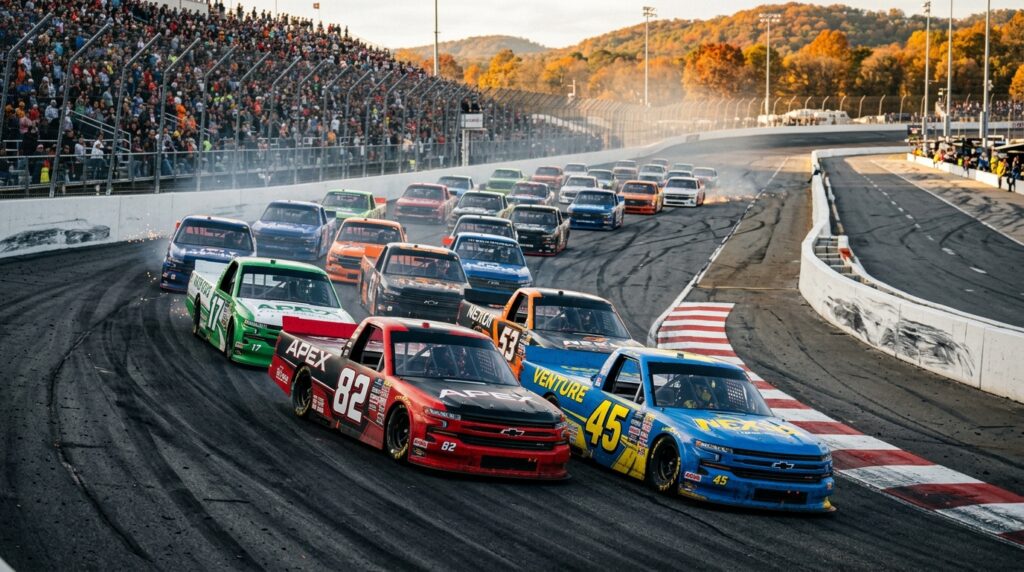
The scheduled start is 6 p.m. Eastern Time, with television coverage on FS1. NASCAR has confirmed a 200-lap contest at the historic half-mile Virginia short track.
Kaden Honeycutt enters the event leading the Chase standings by 43 points over Layne Riggs. Five championship contenders remain eligible, while five other drivers have been eliminated from title contention.
For New England truck racing fans, Martinsville offers a useful comparison with the tight competition regularly seen on regional short tracks.
Here is what to watch before the green flag and why the race could influence the November 6 championship finale.
NASCAR Truck Series Martinsville 2026: Race Information
Martinsville Speedway is located in Ridgeway, Virginia, and is known for its distinctive paperclip-shaped layout.
Its relatively short straights and tight corners create repeated braking and acceleration demands.
These characteristics often generate close racing and frequent battles for track position.
Race Date, Distance, Broadcast and Entry List
NASCAR’s October 26 announcement confirms that the event is scheduled for Friday, October 30.
The race will cover 200 laps, with practice and qualifying activities scheduled earlier in the day.
What Time Does the Martinsville Truck Race Start?
The Black’s Tire 200 is scheduled to begin at 6 p.m. Eastern Time.
The television broadcast is listed on FS1, with additional coverage available through FOX One and NASCAR radio partners.
However, programming details can change because of weather or other operational circumstances.
Fans should verify the official broadcast schedule before race day.
For New England viewers, the event takes place in the same Eastern Time zone used throughout much of the region.
That makes it convenient for fans watching from Connecticut, Massachusetts, Rhode Island, New Hampshire, Vermont, and Maine.
Those attending in person should review the speedway’s published parking and entry instructions.
Television viewers can consult the official NASCAR Truck Series schedule.
As with any sporting event, starting times and broadcast arrangements are subject to change.
Stages, Race Distance and Qualifying Schedule
The Martinsville event is scheduled for 200 laps on a 0.526-mile oval.
The published race information identifies stage-ending laps at 50 and 100, followed by the final segment to lap 200.
Practice is scheduled for 12:30 p.m. Eastern Time on October 30.
Qualifying is scheduled for 1:35 p.m.
These sessions can provide useful information about which teams have immediate short-track speed.
However, practice performance does not guarantee a strong race result.
Long-run handling, pit strategy, traffic, and caution periods can alter the order significantly.
Qualifying position is particularly relevant at a track where passing opportunities can become difficult.
Yet even a pole starter must survive a full 200-lap race.
The event entry list includes 36 trucks for 36 available starting positions.
Drivers and teams may make adjustments before race day, so use official entry information for the final lineup.
The Championship Battle Entering Martinsville
The Chase standings create the central storyline heading into the race.
Unlike a normal regular-season contest, Martinsville takes place with only a small group of drivers still eligible for the championship.
Honeycutt Leads Riggs by 43 Points
According to NASCAR’s October 26 preview, Kaden Honeycutt holds a 43-point Chase lead over Layne Riggs.
Honeycutt drives the No. 11 TRICON Garage Toyota.
Riggs competes in the No. 34 Front Row Motorsports Ford.
Both have been important figures throughout the 2026 season.
Riggs won the August race at New Hampshire Motor Speedway, giving New England fans a memorable connection to his championship campaign.
Honeycutt has also demonstrated race-winning pace and consistent competitiveness.
However, neither driver has a guaranteed outcome at Martinsville.
Mechanical trouble, an incident, or an unusually strong performance by another contender can influence the standings.
Even with a substantial points advantage, Honeycutt must manage the risks of short-track racing.
Riggs, meanwhile, has an opportunity to reduce the deficit before the finale.
For background on their New Hampshire showdown, read our Layne Riggs Loudon victory recap.
Which Drivers Have Been Eliminated?
NASCAR confirms that five competitors are already eliminated from the 2026 Truck Series championship battle.
They are Gio Ruggiero, Daniel Hemric, Ben Rhodes, Tyler Ankrum, and Grant Enfinger.
Elimination from championship contention does not necessarily mean these drivers cannot compete in the remaining races.
They may still race for individual victories, team goals, and valuable experience.
This distinction matters because an eliminated competitor can influence a title contender’s afternoon.
A fast driver outside the championship fight may challenge for the lead or change the strategy of nearby teams.
However, no competitor should be assumed to intentionally interfere with another driver’s championship effort.
The final outcome will depend on normal racing decisions and how the event develops.
Fans should also avoid treating the 43-point lead as a guarantee that the championship is already decided.
The remaining schedule still includes Martinsville and Homestead-Miami.
Why Martinsville Could Decide the NASCAR Truck Championship
Martinsville is famous for intense racing in limited space.
Drivers repeatedly accelerate from the corners, brake into the next turn, and battle for room alongside competitors.
This style places heavy demands on both drivers and equipment.
Short-Track Strategy and Lessons for New England Racers
For local teams racing in Connecticut or elsewhere in New England, Martinsville presents familiar tactical questions on a national stage.
However, the trucks, equipment rules, and race lengths may differ substantially from regional divisions.
Protect the brakes through repeated corner entries.
Martinsville’s configuration requires consistent slowing and acceleration.
Drivers who overuse their brakes early may create problems later in the race.
At the same time, cautious braking can surrender valuable positions.
Teams must find an effective balance between speed and equipment management.
Regional racers face similar decisions, although the technical solutions depend on their vehicles and rules.
Understand the importance of track position.
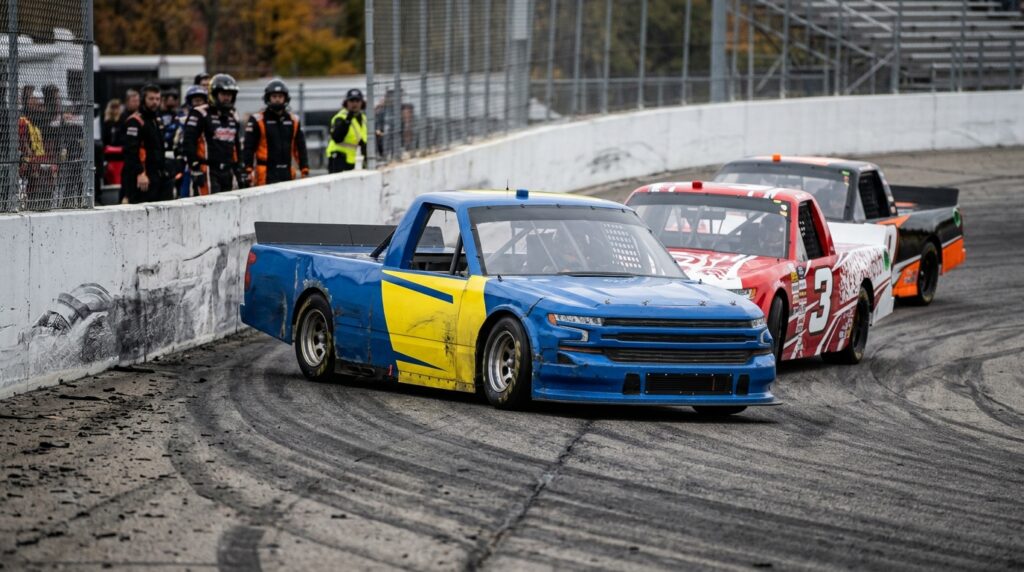
Passing can be challenging when trucks run close together through the corners.
A driver who falls into traffic may lose valuable time behind slower competitors.
That can make qualifying and pit strategy especially influential.
However, maintaining track position is not worth violating safety procedures or pit-road regulations.
The most successful teams combine preparation with disciplined execution.
Expect pressure during restarts.
Short-track restarts create opportunities because the field runs close together.
They also increase the risk of contact.
Drivers need to respond quickly while keeping control of their trucks.
At Martinsville, a small change in speed or position can affect several nearby competitors.
This is one reason clean execution matters so much late in an important race.
Why equipment reliability matters during a title fight
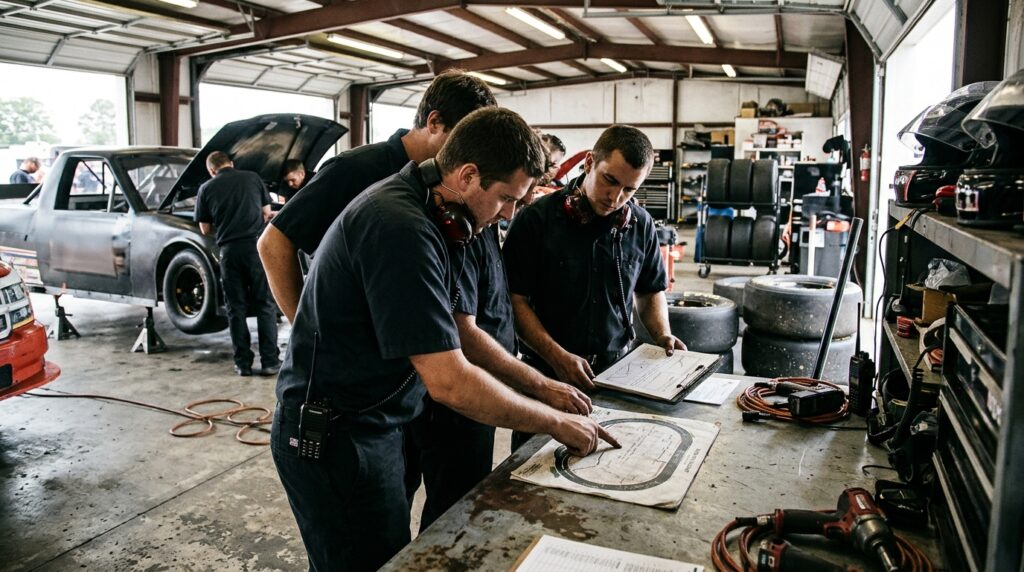
Teams may spend considerable time improving speed, but reliability remains essential.
A damaged tire, mechanical failure, or pit-road mistake can change a championship outlook.
For teams with a points advantage, avoiding preventable problems may be especially important.
However, a conservative approach can also surrender opportunities to competitors.
There is no universal strategy that guarantees the best result.
Teams must respond to changing race conditions and championship needs.
What New England short-track drivers can learn
Regional racers can study Martinsville for its close-quarter competition, restarts, and braking demands.
Those skills are relevant at venues where track position can be difficult to recover.
However, a regional driver should not copy NASCAR-specific vehicle setups without considering the local rulebook.
Suspension specifications, tire compounds, engines, and track surfaces may differ considerably.
Learning about decision-making is often more transferable than copying exact equipment settings.
Our beginner’s guide to truck racing offers broader preparation advice for newcomers.
What happens after Martinsville?
The NASCAR Craftsman Truck Series championship race is scheduled for November 6, 2026, at Homestead-Miami Speedway.
That event will close the seven-race Chase.
Martinsville therefore represents the final opportunity to change the standings before championship night.
However, the precise points scenarios will depend on official results and the applicable championship rules.
Fans should consult NASCAR’s updated standings after the checkered flag.
How to follow the race responsibly
Use NASCAR’s official website for entry lists, results, and standings.
Be cautious with unofficial graphics circulating on social media before or during the race.
Lineups and driver points can change after inspection or penalties.
Official confirmation is especially important during the championship’s final weeks.
Frequently asked questions
When is the 2026 Martinsville Truck race?
Friday, October 30, 2026.
What time does it start?
6 p.m. Eastern Time, according to the current NASCAR schedule.
How many laps are scheduled?
Two hundred laps.
Who leads the Chase standings?
Kaden Honeycutt leads Layne Riggs by 43 points entering the race.
When is the championship finale?
Friday, November 6, at Homestead-Miami Speedway.
Final thoughts
The NASCAR Truck Series Martinsville 2026 event brings championship pressure to one of the sport’s best-known short tracks.
Honeycutt enters with an advantage, but close racing and unexpected incidents could alter the final points picture.
For New England fans, the event offers both championship excitement and practical lessons about short-track competition.
Check official NASCAR updates for the latest schedule and results.
Editor’s note: This preview reflects information confirmed October 28, 2026. Race schedules and championship standings may change.