
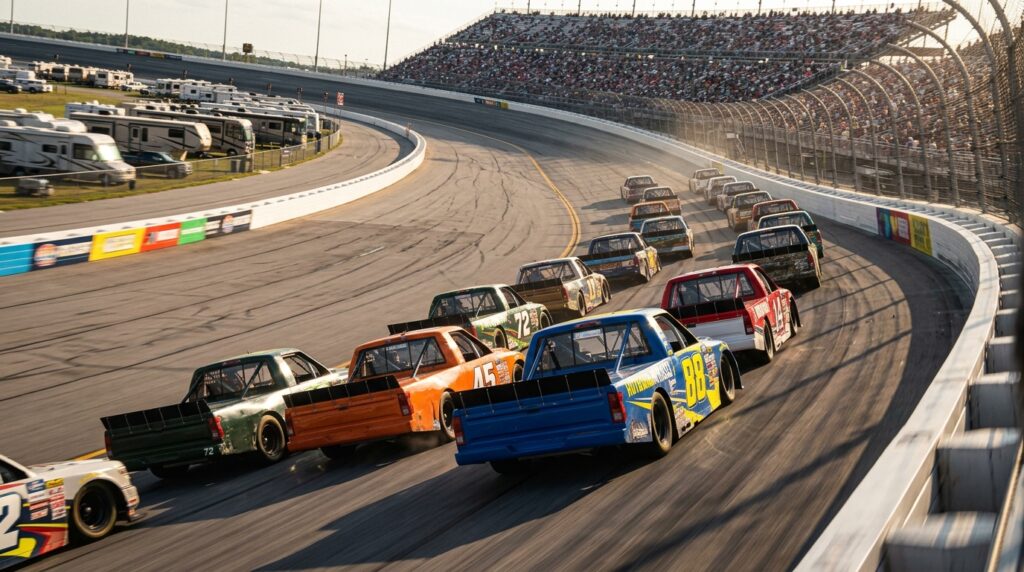
The NASCAR Truck Series Talladega 2026 race will challenge championship contenders in one of stock-car racing’s most unpredictable environments. On October 23, the Craftsman Truck Series returns to Talladega Superspeedway for the Love’s RV Stop 225, an important late-season event in the seven-race Chase.
Talladega is famous for close drafting, large racing packs, and sudden changes in running order. Those conditions can create opportunities for drivers outside the championship battle while increasing pressure on title contenders.
New England racing fans already have a strong connection to this championship season. The Truck Series visited New Hampshire Motor Speedway in August, where Layne Riggs won the regular-season finale.
This preview explains Talladega’s challenges, the importance of drafting partners, and what fans should watch before the championship reaches Martinsville and Homestead.
Why Talladega Matters in the 2026 Truck Series Chase
NASCAR’s 2026 Chase format rewards performance across seven championship races. Ten qualifying drivers remain eligible for the title throughout the final stretch.
The championship does not use the previous round-by-round elimination structure. Instead, drivers accumulate points across the Chase, making both victories and consistent finishes valuable.
That structure makes Talladega especially interesting. A strong contender could gain important points, while an unexpected incident could create a difficult setback.
How Talladega changes the championship calculation
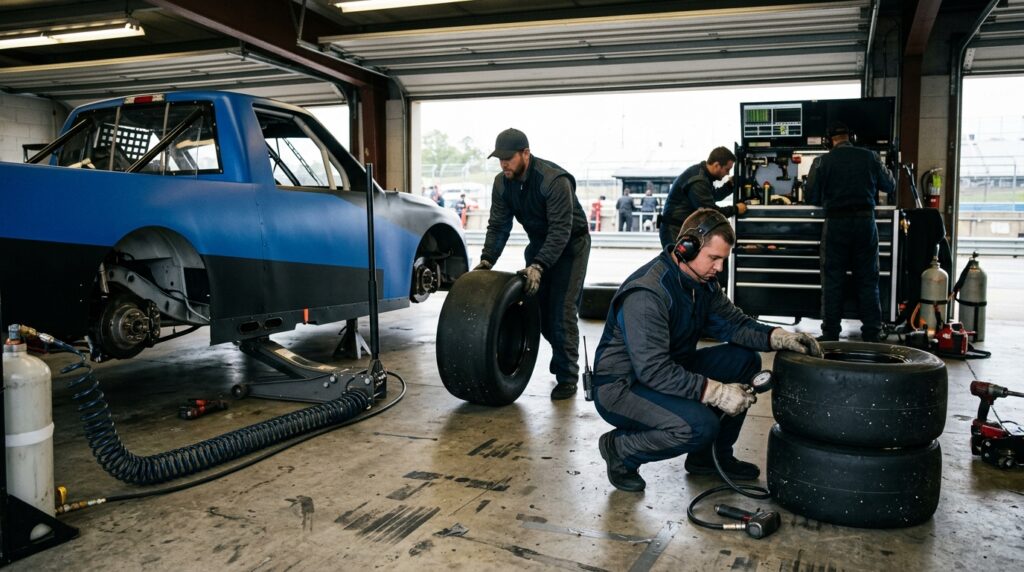
Talladega differs from most tracks because aerodynamic drafting plays a major role in race performance. Trucks running near one another influence airflow, which can help drivers maintain momentum within a pack.
However, close racing reduces the time available to respond when another vehicle changes direction or loses control.
A title contender must decide when to challenge for positions and when patience offers a better opportunity.
The strongest strategy can change repeatedly as the race develops.
Why drafting partners matter at superspeedways
At Talladega, one truck running alone may struggle to maintain the speed of a coordinated group.
Drivers often depend on surrounding competitors to maintain momentum through the corners and along the straightaways.
However, a drafting partner may become a rival moments later.
Truck handling, aerodynamic behavior, and traffic conditions influence whether a move succeeds.
Spotters also provide crucial information about nearby vehicles and developing opportunities.
Fans should watch how groups form, separate, and reorganize throughout the event.
How crashes can affect Chase standings
Large racing packs create the possibility of multi-truck incidents when contact spreads through nearby traffic.
Even a minor change in direction can become significant when several trucks run closely together.
A championship contender involved in a crash may lose positions or fail to finish.
Under the Chase system, those lost points can influence the final standings.
However, drivers cannot eliminate every racing risk simply by remaining behind the leaders.
The challenge involves balancing competitive positioning with sound judgment.
Read our 2026 NASCAR Truck Series Chase preview for an explanation of the championship format.
What to know about the October 23 race
NASCAR lists the Love’s RV Stop 225 for Friday, October 23, 2026, at Talladega Superspeedway in Alabama.
The published race schedule calls for 85 laps, with stage breaks after laps 20 and 40.
As of this preview, the official NASCAR ticket calendar lists a 4 p.m. Eastern start.
However, event schedules remain subject to change.
Why stage points deserve attention
Stage racing gives teams opportunities to collect points before the final finish.
That can influence strategy when championship contenders weigh track position against other priorities.
A strong stage result may help a driver even if the final portion of the race becomes difficult.
Conversely, an aggressive move for a stage position may expose the truck to additional contact.
Fans can follow the changing standings through NASCAR’s official scoring resources.
The official NASCAR Truck Series schedule provides confirmed event information.
What New England Truck Racing Fans Should Watch
Talladega’s size and speed differ significantly from a local New England short track.
Nevertheless, both racing environments reward anticipation, clear communication, and careful decision-making.
At New London-Waterford Speedbowl, drivers must manage traffic, restarts, and limited racing space. Talladega increases the scale of those same competitive pressures.
Follow the drivers, spotters, and race strategy
A superspeedway race often looks chaotic from the grandstands. Inside the competition, however, drivers and crews continuously make calculated decisions.
Teams monitor track position, tire condition, fuel needs, and the behavior of other competitors.
Spotters observe the field and communicate useful information to drivers.
Every part of the operation can influence the final result.
Why the final laps may produce the biggest changes
Drivers often become more aggressive as the checkered flag approaches.
Some attempt to form new drafting lines, while others protect a position near the front.
However, the fastest-looking lane may lose momentum when its drivers fail to coordinate.
A contender who leads with several laps remaining may face challenges from multiple directions.
The race can change dramatically before the finish, which makes predicting a winner difficult.
Watch the championship contenders carefully
Layne Riggs entered the Chase as the top seed after a strong regular season, including his August victory at New Hampshire.
However, the championship involves several competitive drivers, and individual race results can alter the outlook.
Review the official standings after Phoenix rather than assuming earlier rankings remain unchanged.
Our Layne Riggs New Hampshire race recap explains his connection to New England’s major NASCAR weekend.
Understand the role of caution periods
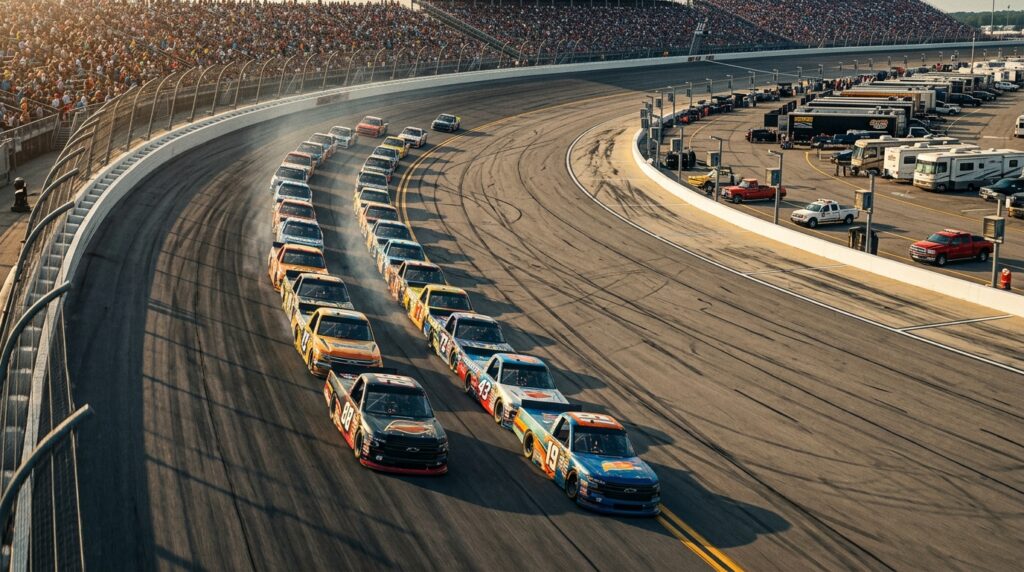
A caution can bring the field together and change pit strategies.
Teams may use the opportunity to address fuel, tires, or handling concerns.
However, a stop may also cost track position.
Drivers must then navigate the restart while managing traffic and competing priorities.
At Talladega, the field can reorganize quickly after green-flag racing resumes.
Pay attention to lane momentum
The inside and outside lines may exchange advantages during a superspeedway race.
One lane might gain speed as trucks work together, while another may lose momentum after a poorly timed move.
Watch how leaders react when the preferred line changes.
A driver who anticipates these shifts may gain positions without making unnecessary contact.
However, no lane guarantees a successful finish.
Remember that equipment reliability matters
Superspeedway racing emphasizes drafting, but mechanical reliability remains essential.
Engine performance, cooling, electrical systems, and suspension components must operate under prolonged racing loads.
Teams also need dependable pit procedures and clear communication.
A fast truck cannot earn championship points if a preventable mechanical problem ends its race.
Reliability deserves the same attention as outright speed.
Compare Talladega with New England racing
Local truck racing often involves shorter races, smaller teams, and tighter corners.
At Waterford, drivers may spend much of a feature trying to create passing opportunities in limited space.
Talladega presents different demands, including pack movement and extensive drafting.
Yet both environments reward patience and the ability to read other competitors.
Those shared skills help connect grassroots racing with national competition.
Follow the remaining championship schedule
After Talladega, the 2026 Truck Series Chase heads to Martinsville Speedway on October 30.
The championship concludes at Homestead-Miami Speedway on November 6.
Each track creates a different competitive challenge.
Martinsville emphasizes short-track braking and positioning, while Homestead rewards effective tire management and long-run speed.
The varied schedule tests whether a team can adapt across several racing styles.
Learn from local championship consistency
New England fans saw a regional example of season-long consistency when Ryan Lineham secured the 2026 Waterford Truck championship.
Tyler Chapman won the final feature, demonstrating that one race victory and the overall season title represent different achievements.
That distinction also matters in NASCAR’s Chase.
Read our Waterford championship recap for the local season’s conclusion.
Use official results instead of rumors
Race-day social media can move quickly, particularly after crashes and penalties.
However, an unofficial update may omit important information.
Use NASCAR’s official timing and results for race classification, points, and confirmed decisions.
Remember that provisional standings can change during the event.
Wait for official confirmation before drawing firm conclusions about championship implications.
What to watch during the final stage
As Talladega approaches the final laps, monitor which drivers control the leading lines.
Watch how crews communicate changes in traffic and how competitors respond.
Pay attention to the position of championship contenders relative to one another.
Also, notice whether the field becomes more aggressive as the finish approaches.
These details often reveal more than simply watching the leader.
Why Talladega is a compelling 2026 Chase event
The NASCAR Truck Series Talladega 2026 race combines championship pressure with the unpredictability of superspeedway drafting.
For New England supporters, it offers another opportunity to follow drivers and teams whose season included a pivotal stop at New Hampshire.
The result may influence the title fight, but no outcome should be assumed before the race.
Expect intense competition, changing strategies, and valuable lessons in racing teamwork.
Editorial note: This preview covers a future race as of October 16, 2026. Confirm the schedule before publishing and update the article with official results after October 23.