
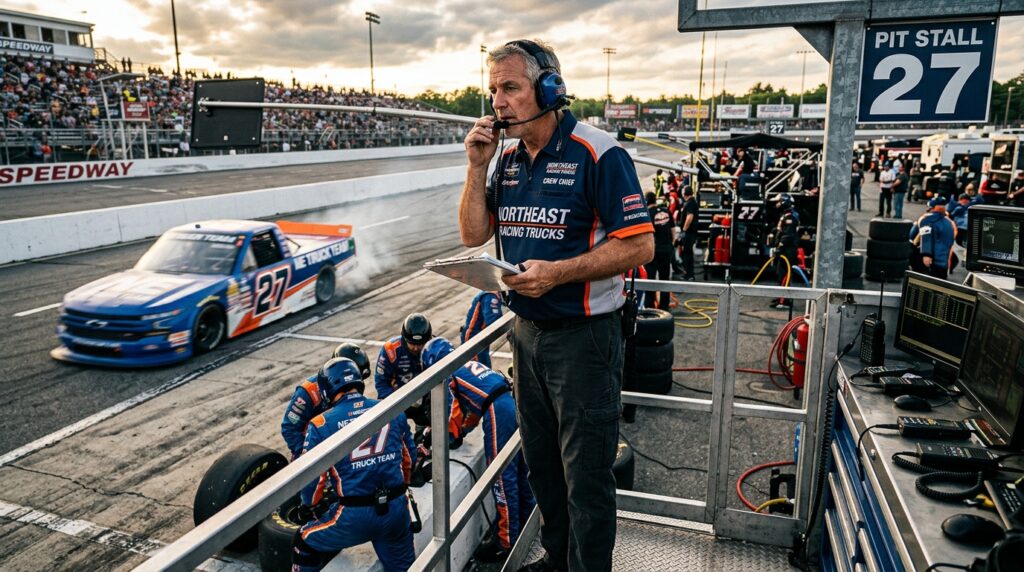
New England racing has always been about more than the drivers behind the wheel. Crew members, fabricators, mechanics, engineers, and crew chiefs often begin at the same local tracks. They learn by working late in small shops, fixing damaged cars, chasing setup changes, and finding ways to make limited resources go faster.
Scott Zipadelli is a strong example of how that path can reach NASCAR’s national level.
The Connecticut native returned to Lime Rock Park in July 2026 as crew chief for Kaden Honeycutt and the No. 11 TRICON Garage team. Honeycutt finished third in the LiUNA 150. The result added another chapter to Zipadelli’s long connection with his home state and showed why New England’s racing culture still matters far beyond local tracks.
Zipadelli’s career includes success in NASCAR’s Truck Series, experience in higher national divisions, and two Truck Series championships. Yet his story started much closer to home. He grew up around racing in Connecticut and spent time at tracks such as Waterford and Stafford before moving south to build a national career.
For fans of the New England Truck Series, that path is worth studying. It shows that local racing can develop more than drivers. It can also build the people who make race teams work.
Our article on how the 2026 truck racing boom can grow New England short-track racing explains why national attention creates opportunities for local teams, drivers, and fans.
How Connecticut Racing Helped Build a NASCAR Crew Chief
Zipadelli was born in New Britain and spent part of his childhood in Berlin before his family moved to East Haddam. Racing was already part of the family. During summers, he and his older brother Greg spent time at their uncle’s race shop in Berlin.
That early exposure mattered. A race shop teaches practical lessons fast. Parts have to fit, setups have to work, and damage must be repaired before the next event.
Zipadelli also raced himself. His Connecticut experience included quarter midgets, Legend cars, Midgets, and Late Models. He competed at New England tracks before deciding that his strongest path in the sport might come from working on race cars rather than trying to make a full-time career as a driver.
Local Tracks Teach More Than How to Drive
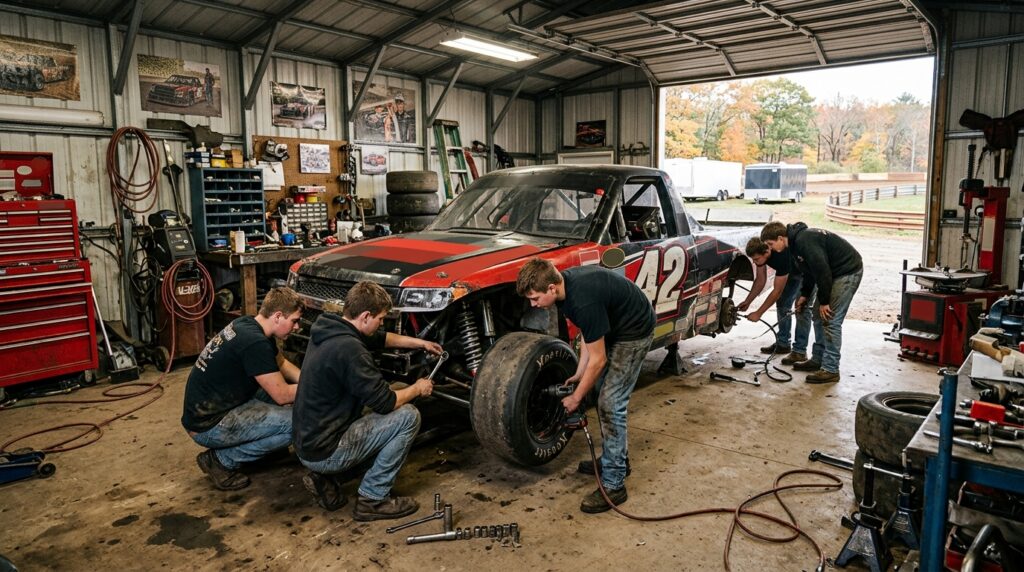
Short tracks create a useful learning environment because small teams often require people to handle several jobs. A crew member may work on suspension, tires, body panels, setup notes, and repairs in the same week.
That creates practical knowledge. You learn what a driver means when the truck feels tight in the center. You see how one setup change can help entry but hurt exit. Local racing also teaches urgency because time and money are limited.
Those skills still matter when the technology and budgets become much larger.
Waterford and Stafford Were Part of the Learning Process
Zipadelli’s early racing included time at Waterford and Stafford, two tracks that hold an important place in the New England racing scene. He raced Legend cars at Waterford and also tried Late Model competition at Stafford.
The value of those experiences goes beyond results. Short-track competition forces drivers and crews to understand traffic, braking, tire grip, restarts, and setup balance. Those same ideas appear at the national level, even if teams use more data and more advanced tools.
Fans can see those basics today at local truck events. Our Waterford Speedbowl truck racing fan guide explains what to watch during restarts, corner entry, and close battles.
Moving South Turned Local Experience Into a Career
Like many racers who want to work at NASCAR’s highest levels, Zipadelli eventually moved to North Carolina. That decision turned years of Connecticut racing experience into a professional career.
He worked across national NASCAR series and built a long résumé as a crew chief. In the Truck Series, he became known for building strong teams and helping young drivers develop.
His record now includes two Truck Series championships. One came in 2018. The second came in 2025 with Corey Heim and TRICON Garage.
That 2025 title also showed the value of team stability. NASCAR’s season review highlighted the way Zipadelli kept the No. 11 group together and helped create a close team culture. That kind of leadership is a major part of the crew-chief role.
Why the Crew Chief Matters So Much in Truck Racing
A crew chief does much more than call pit stops.
The job connects the driver, engineers, mechanics, pit crew, and team leadership. The crew chief guides setup direction before the race and makes changes as conditions shift. During the event, that person must also read cautions, tires, fuel, track position, and driver feedback.
Truck racing makes those choices important. The vehicles depend heavily on track position and can change balance as tires wear. A strong driver-crew chief relationship helps turn feedback into useful changes.
Mentoring Young Drivers Has Become Part of Zipadelli’s Role
Zipadelli has said that helping young drivers grow is now one of the most rewarding parts of his career. That fits the role he has played with TRICON Garage.
In 2025, he guided Corey Heim’s championship-winning No. 11 team. In 2026, he is working with Kaden Honeycutt in the same organization. Honeycutt earned his first Truck Series victory at Watkins Glen in May and finished third at Lime Rock in July.
For a young driver, an experienced crew chief can provide more than setup knowledge. Veterans can help with race management, communication, preparation, and the mental side of a long season.
That mentoring role also connects back to grassroots racing. Local teams often depend on experienced racers teaching younger people how the sport works. The scale changes in NASCAR, but the basic idea does not.
What Zipadelli’s Career Means for New England Racing Today
New England motorsports sometimes gets discussed as if it exists separate from national NASCAR. Zipadelli’s career shows why that view is too simple.
The region has long produced drivers, crew members, mechanics, team leaders, and racing knowledge. Tracks such as Waterford, Stafford, Thompson, Lime Rock, and New Hampshire give people different ways to learn the sport.
Some will become drivers. Others may discover that they are better at chassis setup, fabrication, engines, data, spotting, or team management. Racing needs all of them.
That makes the current national spotlight on New England especially useful. Lime Rock now hosts the Truck Series, while New Hampshire Motor Speedway will host the 2026 regular-season finale. Fans can see national teams compete in the same region where many racing careers began.
Local Racing Can Be a Career Pipeline, Not Just Entertainment
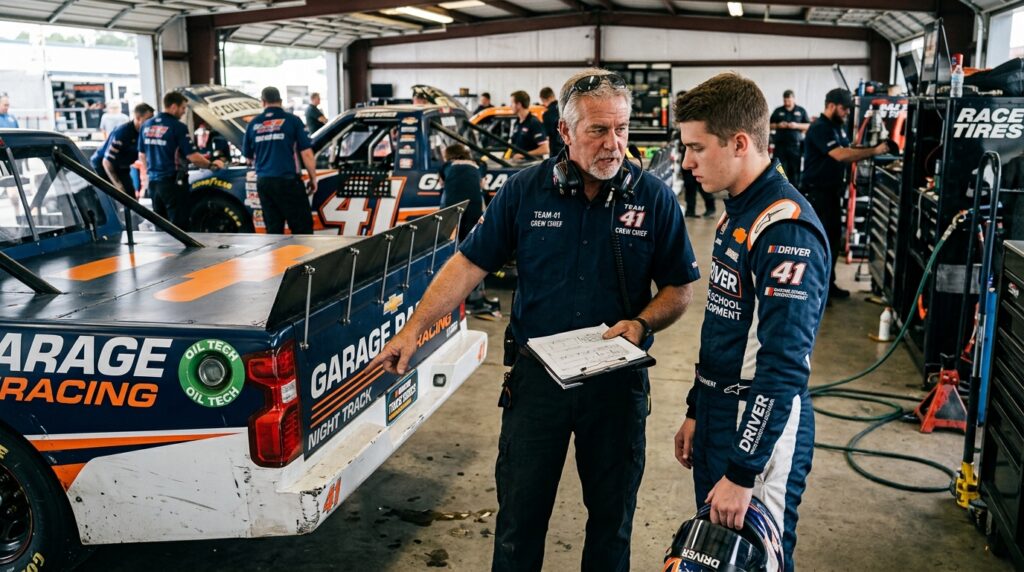
For young people interested in motorsports, the lesson is simple: driving is not the only route into racing.
A local team can teach mechanical skills and race-day discipline. Setup work can lead toward engineering, while photos, video, and social media can build experience in motorsports media. Regional series give new people a realistic place to enter the sport and build connections.
This is one reason grassroots racing matters beyond the Saturday-night show. Every race requires people who understand tires, suspension, engines, safety, fabrication, data, logistics, communication, and strategy.
Someone may join a team because they simply enjoy racing. Over time, that person can discover a skill that becomes a career.
The progression does not need to happen quickly. Many racing careers develop through years of small opportunities. Helping one team can lead to another connection. Learning fabrication can lead to a shop job. Strong setup knowledge can create an engineering opportunity.
The important part is getting involved and continuing to learn.
The Next New England NASCAR Success Story May Start at a Short Track
Zipadelli’s path from Connecticut racing to national championships did not happen overnight. It came from years of learning, moving through different roles, and staying in the sport long enough to build experience.
The next person to follow that type of path may already be working on a truck at a New England track.
National events can help inspire that next step. A young mechanic who watches a Truck Series crew at Lime Rock or Loudon may start asking how to get involved. A local driver may see that short-track skills can lead to bigger opportunities. A sponsor may realize that supporting a regional team helps keep the racing pipeline alive.
The connection works in the other direction too. National racing depends on grassroots motorsports to produce people who understand the culture of race teams. Not everyone arrives through a college engineering program or a major development system. Many still learn by getting their hands dirty around race cars.
Our 2026 Truck Series finale preview at New Hampshire shows how crew-chief strategy can become just as important as driver speed when national teams come to New England.
For official information about the current No. 11 team, NASCAR lists Scott Zipadelli as crew chief for Kaden Honeycutt and TRICON Garage on its Kaden Honeycutt driver page.
Scott Zipadelli’s story is not only a NASCAR success story. It is also a New England racing story.
He learned the sport in Connecticut, raced on regional tracks, worked around local race shops, and eventually turned that experience into a national career. Decades later, he returned to Lime Rock as a championship-winning crew chief and helped another young driver reach the podium.
That full-circle moment is a reminder of what local racing can produce. The short track is not always the final destination. Sometimes it is the classroom.
For the New England Truck Series and the wider regional racing community, that is an important message. Every local event can help develop the next driver, mechanic, crew chief, engineer, or team leader. Keeping grassroots racing strong keeps that pathway open.