
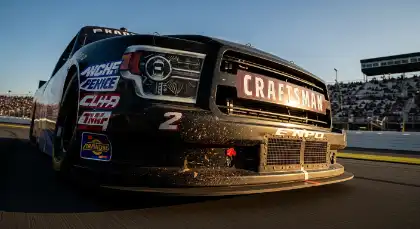
As the 2026 NASCAR Craftsman Truck Series season enters its critical summer stretch, the technical landscape is shifting. With the “Triple Truck Challenge” on the horizon and the highly anticipated regular-season finale at New Hampshire Motor Speedway approaching on August 22, NASCAR’s technical directors have introduced a series of updates aimed at the short-track package. These updates aren’t just minor tweaks; they represent a fundamental shift in how teams manage heat, downforce, and mechanical longevity in high-braking environments.
The Science of the 2026 Short-Track Package
Short-track racing in the Truck Series has always been a battle of attrition. Tracks like Martinsville, Richmond, and the regional favorite, Stafford Speedway, demand a unique balance of mechanical grip and thermal management. For 2026, the primary focus of the technical bulletins has been the “Spec-Engine” cooling system. Because the Truck Series utilizes a sealed engine program to control costs, maximizing the efficiency of these units under extreme conditions is paramount.
1. Revised Radiator Shrouding and Airflow
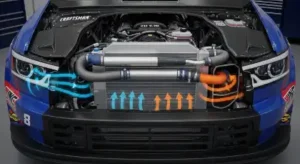 The latest update mandates a new internal radiator shroud design. In previous seasons, teams found “grey areas” in how airflow was diverted around the nose of the truck to create front-end downforce. The 2026 regulation standardizes the ducting dimensions, ensuring that air is primarily used for engine cooling rather than aerodynamic manipulation. While this slightly reduces front-end “stick” in the corners, it ensures that the spec engines can operate at peak RPM for longer durations without the risk of thermal degradation.
2. Brake Ducting and Thermal Dissipation
Short tracks are notoriously hard on braking systems. The 2026 updates include a larger diameter for brake cooling ducts, but with a stricter “exit-only” flow path. This prevents teams from using brake duct air to pressurize the wheel wells—a common trick used to reduce drag. For drivers like William Ruggiero, who has shown incredible prowess in qualifying, these changes mean that race-trim consistency will be more dependent on driver feel and brake management than aerodynamic “crutches.”
Manufacturer Rivalries: The Ram Factor
Perhaps the most exciting variable in this technical evolution is the return of Ram with Kaulig Racing. Introducing a new manufacturer body style into a field dominated by Ford, Chevrolet, and Toyota required a meticulous wind-tunnel balancing act. The 2026 short-track technical updates were partially designed to ensure that the new Ram 1500 bodywork fits within the existing “Aero-Match” parameters.
Kaulig Racing has been working closely with NASCAR to ensure that the Ram’s unique front-end geometry provides adequate cooling while maintaining the manufacturer’s signature look. For fans tracking these developments on dailyautosport.com, the early data suggests that the Ram trucks may actually have a slight cooling advantage due to their wider grille opening—a trait that could prove decisive during the humid August races in New England.
Strategic Implications for “The Trip”
The “Triple Truck Challenge,” or “The Trip,” is the ultimate test of these technical updates. With three races offering significant cash bonuses, teams are incentivized to push their equipment to the absolute limit. In 2026, the series of races—including the stop at Lime Rock Park—will serve as a high-speed laboratory for these cooling updates.
Crew chiefs are now faced with a “risk vs. reward” scenario: Do they tape up the grille for a qualifying burst and risk an engine overheat, or do they play it safe with the new shrouding? In a series where autosportasia.com has noted an increasing influx of international technical talent, we are seeing more sophisticated simulation models being used to predict these cooling curves before the trucks even hit the track.
The Road to New Hampshire: The August 22nd Finale
 Everything in the 2026 season builds toward August 22, 2026, at New Hampshire Motor Speedway. As the regular-season finale, the Team EJP 175 is the final gateway to the Playoffs. New Hampshire is a “technical” short track—a flat, one-mile oval where “The Magic Mile” requires a truck that can turn the center while maintaining rear-drive on exit.
The 2026 cooling updates will be vital here. Historically, New Hampshire in late August can see track temperatures exceeding 110 degrees Fahrenheit. The teams that have mastered the new airflow regulations will have a distinct advantage in the long runs. For local fans, watching how these technical updates manifest on track will be the highlight of the summer racing season.
Conclusion: A New Era of Technical Parity
The 2026 NASCAR Truck Series technical updates for short tracks represent a commitment to parity and mechanical reliability. By standardizing cooling systems and refining the aerodynamic interplay between manufacturers, NASCAR is putting the race back into the hands of the drivers and the crew chiefs. Whether you are following the rise of regional stars or the return of legendary manufacturers, the technical precision behind the scenes is what makes the 2026 season one for the history books.
Stay tuned to New England Truck Series for ongoing technical breakdowns and live coverage of the 2026 campaign.