
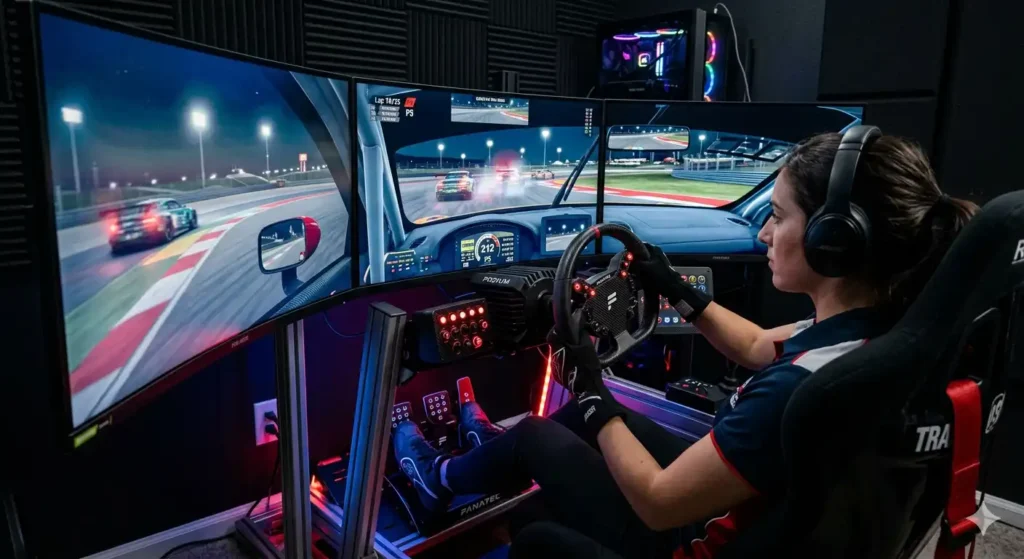
Over the past decade, sim racing has grown from a niche hobby into an important training tool for modern motorsports. Advanced racing simulators now allow drivers to practice on digital versions of real racetracks, analyze driving data, and compete against racers from around the world. This technology has created a new pathway for aspiring drivers who hope to transition from virtual competition to real truck racing.
For young racers and motorsports fans, sim racing offers a realistic introduction to the world of competitive driving. While it cannot fully replace real track experience, it can help drivers develop many of the technical and strategic skills required in truck racing. As the technology continues to improve, sim racing is becoming an increasingly important step in the journey toward professional motorsports.
The Rise of Sim Racing in Motorsports
 Sim racing has existed for decades, but the technology behind it has improved dramatically in recent years. Platforms such as iRacing, Assetto Corsa, and rFactor provide detailed simulations of real racing conditions. These programs replicate elements like tire wear, vehicle weight distribution, track surfaces, and aerodynamic effects.
This realism allows drivers to experience the challenges of racing without stepping inside an actual vehicle. Racers can practice braking points, corner entry techniques, and racing lines while competing against other drivers in online events.
Because of this realism, many professional racing teams now use simulators as part of their training programs. Drivers can prepare for upcoming races by studying track layouts and experimenting with different vehicle setups before race day.
How Sim Racing Helps Drivers Develop Skills
Sim racing may appear similar to video gaming, but the skills required are much closer to real motorsports than many people realize. Drivers must understand vehicle handling, react quickly to track conditions, and manage race strategy.
Some of the key skills drivers develop through sim racing include:
- Understanding racing lines and corner entry techniques
- Practicing braking points and throttle control
- Developing race strategy and decision-making
- Improving reaction time during close competition
- Learning unfamiliar racetracks before racing on them
These skills are valuable for drivers who eventually transition to real-world racing environments.
From Virtual Competition to Real Racing
In recent years, several drivers have successfully moved from sim racing leagues into real motorsports competitions. Online racing platforms often host competitive leagues where participants race against highly skilled drivers from around the world.
Some teams and racing organizations have begun paying attention to these communities. Drivers who consistently perform well in sim racing events may gain opportunities to test real race vehicles or participate in development programs.
This trend demonstrates how virtual racing can help talented drivers gain visibility and experience before entering the physical racing world.
The Role of Regional Racing Series
Although simulators offer valuable practice opportunities, real-world track experience remains essential. Regional racing leagues provide the environment where drivers learn how to handle real vehicles under competitive conditions.
Organizations like the New England Truck Series play an important role in this process. These leagues allow drivers to compete on short tracks while gaining experience in race strategy, vehicle handling, and teamwork with crew members.
For many aspiring racers, regional competitions serve as the bridge between practice and professional motorsports.
Why Sim Racing Appeals to Young Drivers
 One of the reasons sim racing has grown so rapidly is accessibility. Traditional racing can require significant financial resources for vehicles, equipment, and travel. Sim racing platforms provide a more affordable entry point for people who want to experience competitive driving.
With a simulator setup, drivers can practice regularly without the costs associated with maintaining a race vehicle. This accessibility has attracted many young drivers who want to develop their skills before pursuing real racing opportunities.
For some racers, simulator training becomes the first step toward a larger motorsports career.
Technology Is Transforming Driver Training
Advances in simulation technology have made training tools more realistic than ever before. Modern simulators include force feedback steering systems, motion platforms, and high-resolution track modeling.
These systems allow drivers to experience realistic feedback that mimics real vehicle movement and track conditions. Teams can also collect data from simulator sessions to analyze driver performance and identify areas for improvement.
As technology continues to advance, simulators are becoming an increasingly valuable part of motorsports preparation.
The Importance of Real Track Experience
Despite the benefits of simulation training, real racing conditions present challenges that cannot be fully replicated in a virtual environment. Physical forces, changing weather conditions, and mechanical factors all influence race performance.
Drivers must learn how to manage these variables during real competitions. This is why many teams combine simulator training with track practice to develop well-rounded racers.
Regional truck racing events provide the environment where drivers can apply their knowledge and gain real racing experience.
The Future of Sim Racing in Truck Racing
The connection between virtual racing and real motorsports continues to grow stronger. As simulation technology becomes more advanced, it may play an even greater role in driver development.
Some racing organizations have already begun hosting competitions where sim racers earn opportunities to test real vehicles. These programs demonstrate how the digital and physical worlds of racing are becoming increasingly connected.
For aspiring truck racing drivers, sim racing may serve as an early training ground where they can build confidence and refine their driving techniques.
Discover More Truck Racing Stories
Truck racing continues to evolve as new technology and new drivers shape the future of the sport. Simulation training is just one example of how modern tools are changing the way racers prepare for competition.
If you enjoy learning about truck racing, driver development, and motorsports technology, explore more stories in the New England Truck Series Blog. You can also visit the New England Truck Series homepage to stay updated on the latest racing news and events.
As sim racing continues to grow, the next generation of drivers may begin their journey in the virtual world before eventually competing on real racetracks across the country.